
Wild Service (Sorbus torminalis) Provenance Trial
Carried out by: Woodland Heritage
Summary Description:
The trial objective is to test different provenances of S.torminalis for survival, growth and stem quality in order to provide recommendations for silvicultural practice. Scottish Forestry Trust’s support for the trial will enable the creation of a survey protocol that will then guide measurements and monitoring to be carried out at regular intervals during the first phase of this project, with survival and early growth analysed after one, two and three years. By the end of the first phase, there will be clear outcomes emerging as to the best performing provenances out of nine selected from the UK and Europe. These results will be disseminated to industry bodies and publications directly and online for wider consumption, representing the only provenance trial for Wild Service Tree ever to have been undertaken in Britain, which will help raise the profile and potential of this under-used but potentially remunerative hardwood.
Timescale: 2020-2023
SFT Funds Awarded: £9,960
Project Outcomes:
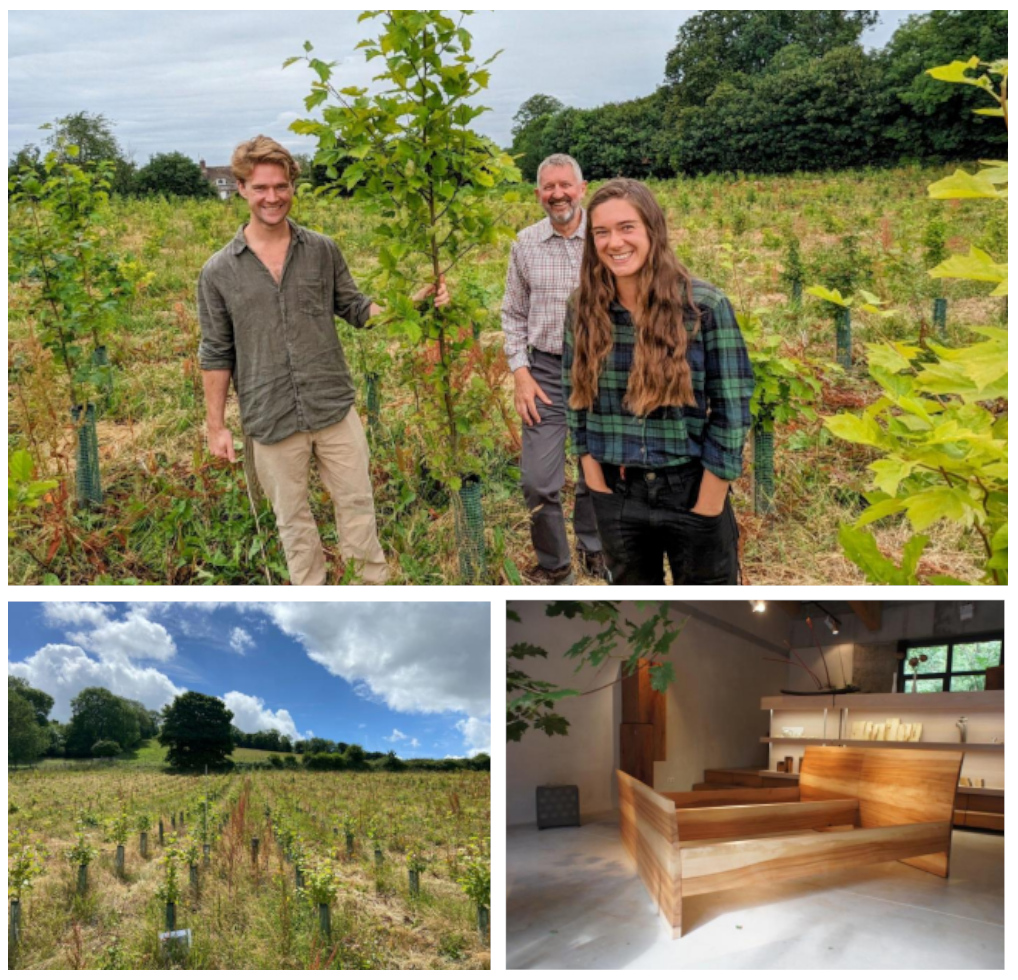
Preliminary analyses carried out based on the first three annual re-measurements clearly indicate a large variation in growth potential among provenances. More specifically:
● Local English provenances lag behind those from further south on the European continent.
● Even more surprisingly, English provenances and the only German provenance included in the experiment, suffer significantly more from apical dieback than the French and the Italian provenances (apical dieback in wild service tree is a phenomenon that relates to site and climate as well as to tree phenology, for example through the impact of late frost, summer drought or hardening/maturation of shoot tissue in the autumn).
● The early assessment of stem quality indicates that the better provenances in terms of growth capacity and apical dieback also perform better in terms of stem quality.
Based on other research on forest genetics and forest tree provenances, it should be cautioned, however, that provenance performance may change over time, especially in lesser-known tree species for which we have less experience and general knowledge of long-term development.