
Mapping impacts of Phytophthora austrocedri in juniper
Carried out by: Centre for Ecology and Hydrology/Forest Research/University of Cambridge
Summary Description:
A key component of resilience of forest ecosystems to pathogens is understanding environmental and ecological processes that favour establishment and spread for effective targeting of mitigation methods.
Such conditions are poorly described for new oomycete Phytophthora pathogens that are damaging forest ecosystems in Britain.
Phytophthora austrocedri is now known to be causing extensive dieback of Juniper, a declining UK Biodiversity Action Plan priority species, in Scotland and northern England.
This project aims to (1) determine how topography, climate, hydrology and host community structure interact to favour disease establishment and spread from field scale to landscape and regional scales (2) understand how conditions favouring juniper population persistence interfaces with conditions favouring disease establishment and (3) develop spatial tools that map P. austrocedri impact on juniper populations for geographical targeting of conservation and biosecurity measures.
Timescale: 2017-2021
SFT Funds Awarded: £45,500
Project Outcomes:
"Introductions of non-native plant pests and pathogens are increasing, negatively impacting natural environments. Mitigation requires knowledge of the drivers of pathogen introduction, establishment and spread, rarely available when pathogens first emerge in novel settings. This thesis uses multi-scale ecological modelling to understand environmental and land management factors driving patterns in infection and impact of the newly discovered oomycete pathogen, Phytophthora austrocedri, on juniper (Juniperus communis).
I first surveyed potential abiotic and biotic drivers of disease severity across three, 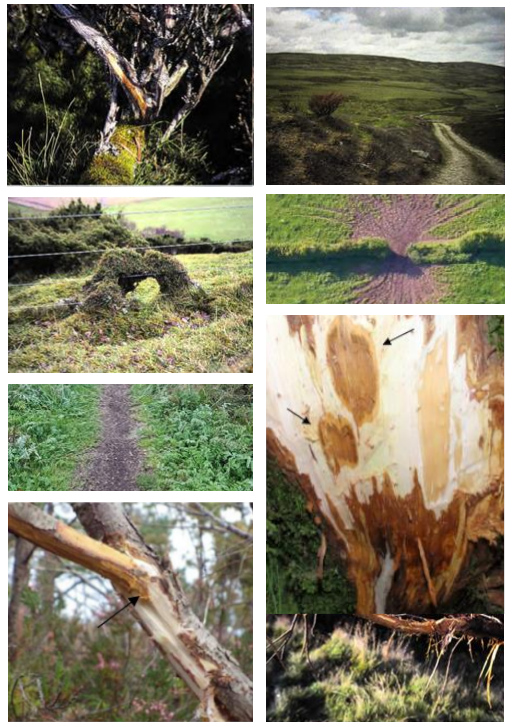 geographically separate juniper populations with different infection histories. In all populations, disease severity increased with increasing soil moisture. Associated plant species that could be used to locate microsites at higher risk of infection were also identified. Change in infection intensity during a four-year period was then mapped across a single juniper population and related to environmental factors underpinning the presence and density of juniper and driving P. austrocedri spread. Colonisations usually occurred within a ~500m radius of previously symptomatic trees, with infrequent dispersal beyond 1km, potentially mediated by livestock and deer. By compiling a novel dataset, I revealed larger, more frequent supplementary juniper planting events increased the likelihood of P. austrocedri presence. Stakeholders managing, monitoring, and growing juniper then participated in a survey investigating how practitioners consider disease risks and whether these processes could be better supported by decision tools. Lastly, a machine learning model and risk map was developed that predicted juniper populations in northern England and central Scotland are at highest risk of infection due to acidic soil pH and increased roe deer density.
My research demonstrates how incorporating a wider range of abiotic and biotic drivers, exploring scale dependence, and integrating stakeholder knowledge can improve the predictive accuracy of host-pathogen-environment models. The results are used to recommend strategies (e.g., reductions in grazing pressure, natural juniper regeneration and heightened on-site biosecurity) to mitigate the serious threat posed by the pathogen to UK biodiversity and habitat restoration goals."
SFT/FC Joint Bursary Award Scheme:. This project has received funding from the SFT/FC Joint Bursary Award.