
Quantifying the Magnitude and Duration of Tree Water Stress
Carried out by: Forest Research
Summary Description:
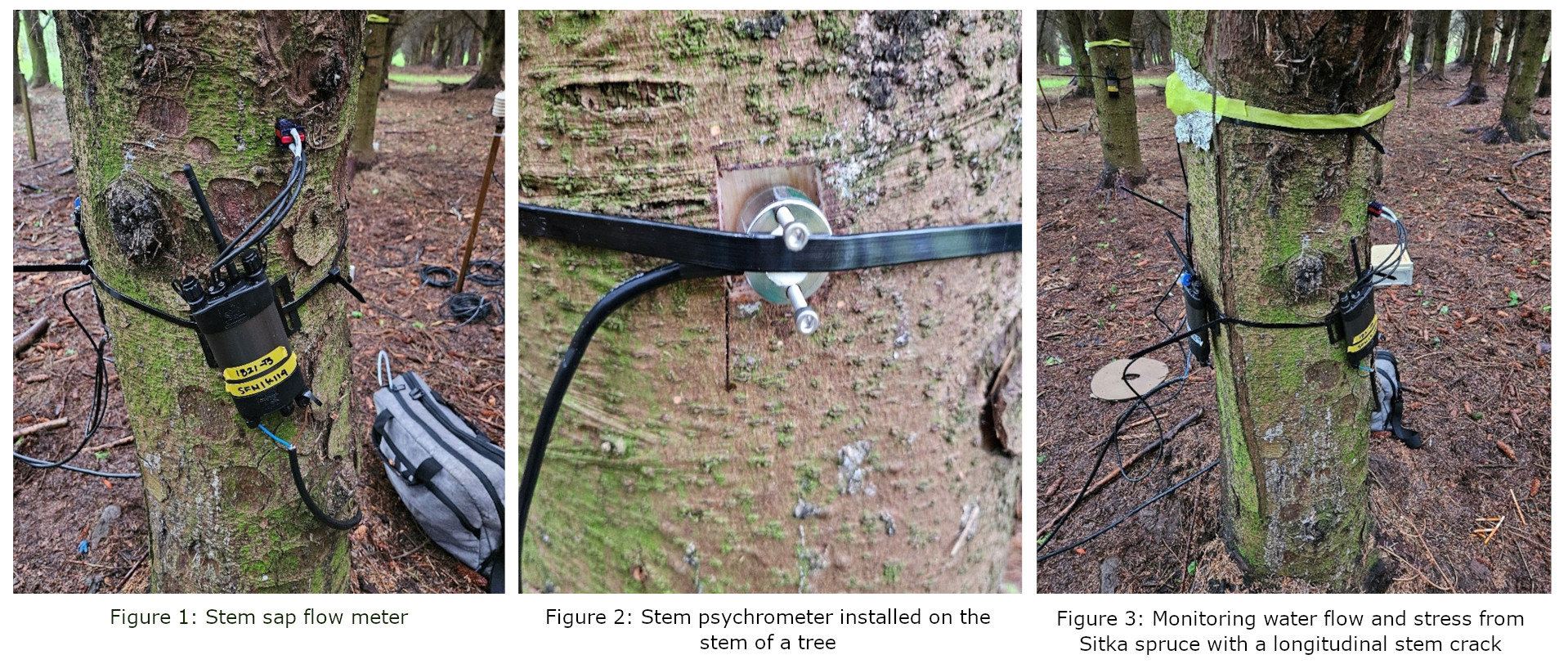
Drought-induced, radial-longitudinal stem cracks are a consequence of meteorological drought. Sitka spruce stands in North-East of Scotland have been reported to have suffered cracks due to hot and dry summers. Since then, these areas have been classified as high drought risk mainly because of their freely-drain soil. However, very little is known about the physiological water stress trees are experiencing. This project will quantify the magnitude and duration of water stress of the soil-plant-atmosphere continuum of Sitka spruce in two locations to evaluate the role of water stress in stem cracks. The researchers will use the latest technology in the "Internet of Things" sensors with a newly developed method of quantifying water stress based on electric circuit theory. Evidence will be proviedd for areas where trees are experiencing water stress, leading to potential stem cracks.
Timescale: 2023-2025
SFT Funds Awarded: £6,779
Project Outcomes:
Excerpt from article Are “drought cracks” really caused by drought? by Dr George Xenakis:
This was a small sample, single-site pilot study examining two Sitka spruce clones over a single main summer period, so we must be cautious and avoid sweeping conclusions. The study suggested that trees with a history of stem cracking can experience greater water stress than nearby trees without cracks, even when growing on the same soil and under the same weather. However, it also opened many more questions. What have the trees experienced before the cracks? Does genetic variability play a role in the formation of cracks? Are there any anatomical differences in wood that may explain why timber cracks? And can we safely say that climatological drought was the catalyst in a chain reaction-type of events that resulted in a costly outcome? The next step is to repeat and expand the work. We need to monitor more trees, across a broader range of sites and soil types, and to follow them through seasons with different weather patterns. The long-term goal is to build a strong evidence base to guide decisions about where particular families or seed sources of Sitka spruce are best planted, and how stands on freely drained or drought-prone soils might be managed to reduce cracking.