Landscape scale lowland deer management
Carried out by: Scottish Forestry
Summary Description:
The aim of the project is to increase understanding of deer and deer management in order to write and assess effective Deer Management Plans. Under the Forestry Grant Scheme, and as a result of the adoption of the new UKFS, deer management plans will now form an important part of grant applications and Long Term Forest Plans. This project will increase understanding of how to write and assess these plans, with a focus on how deer numbers and impacts are monitored and will also give some practical experience in deer management.
Timescale: 2024 - 2025
SFT Funds Awarded: £5,700
Project Outcomes:
The five specific aims of the project were:
1. To train agents and landowners on how to complete effective and useful Deer Management Plans (DMP) and SF staff to assess them. Participants were trained in all aspects of deer monitoring, and were introduced to the recommended DMP template.
2. Increase general understanding of deer and their management. The initial theory was delivered as training sessions on roe deer ecology, and another session by NatureScot on roe deer and the law. Expert sessions and Q&As were provided by drone operator Ben Harrower Ltd, John Bruce from the Lowland Deer Network, Paul Roberts and Kevin McCulloch the NatureScot deer team employees, and Callendar Estate deer manger Jim Conway.
3. Provide practical experience in deer management (pre DSC1 and stalking experience) to aid understanding of effective forest design. All participants went on a pre- DSC training course delivered by BASC; half then attended DSC1 and passed the assessment. Some participants accompanied FLS wildlife managers to see stalking in action.
4. Training on different monitoring methodologies. A theory training session, followed by a practical session, was given on each monitoring methodology.
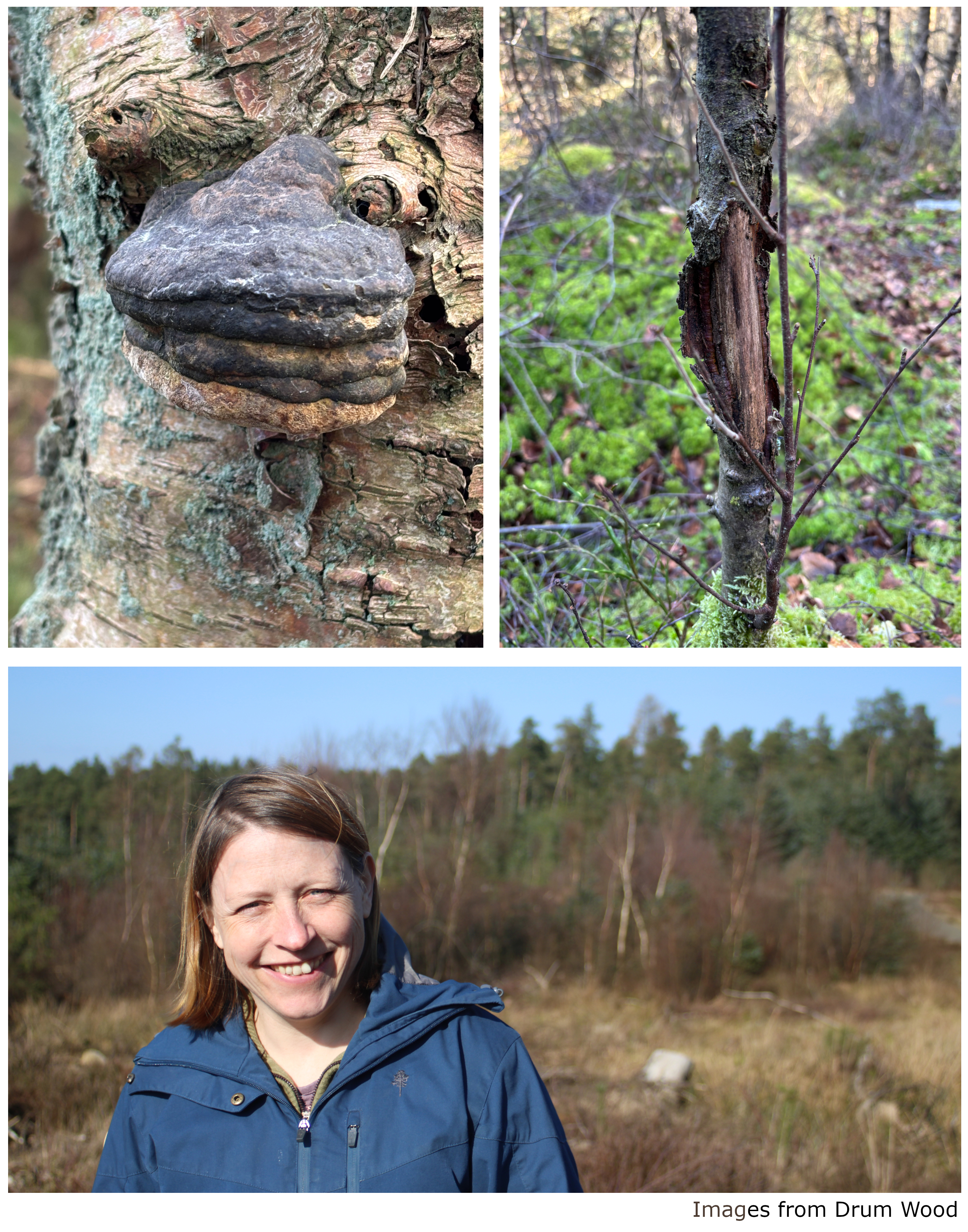
5. Undertake, as a group, the monitoring of a woodland (Callendar Estate’s Drum Wood) near Falkirk to assess deer numbers and compare and contrast methodologies. This included Herbivore Impact Assessments (HIAs) dung counting, nearest neighbour assessments, using camara traps, direct counting using a thermal camera and drone surveys.