
Ancient Slope Alder Wood Pasture: Integrated case study for restoration
Carried out by: Borders Forest Trust
Summary Description:
Borders Forest Trust (BFT) proposes to carry out an innovative, integrated ecological and historical case study of an ancient wood pasture on our site at Ericstane, near
Moffat. This will inform a management plan for robust, sensitive ecological restoration.
The case study will synthesise four elements: historic map analysis, specialist woodland walkover, dendrochronology study and in-depth ecological surveys, allowing for restoration and expansion of a slope alder wood pasture, a rare surviving habitat in southern Scotland.
BFT will use its platform to publicise and disseminate the learnings from this integrated study, to further facilitate restoration and showcase best practice. This work will promote collaboration in an upland context where “Wood pasture may offer a structure that can reunite forester, farmer and naturalist in restoring and maintaining a valued habitat and a sustainable multiple land use.” (Stiven & Holl)
Timescale: 2024 - 2025
SFT Funds Awarded: £5,000
Project Outcomes:
This project sought to address the following:
1. Dairy Wood’s place in the cultural landscape: Significant progress made.
Analysis of historical map record by woodland historian and forester Peter Quelch of Dendrochronicle examined the earliest extant maps of the area and discovered a pre-agricultural improvement township on the site of the woodland. Complementing this, dendrochronology analysis of 14 trees in the woodland by Dr Coralie Mills of Dendrochronicle built a detailed picture of the history of the trees.
2. Can Dairy Wood be classified as ancient ‘slope alder’ wood pasture? Significant progress made.
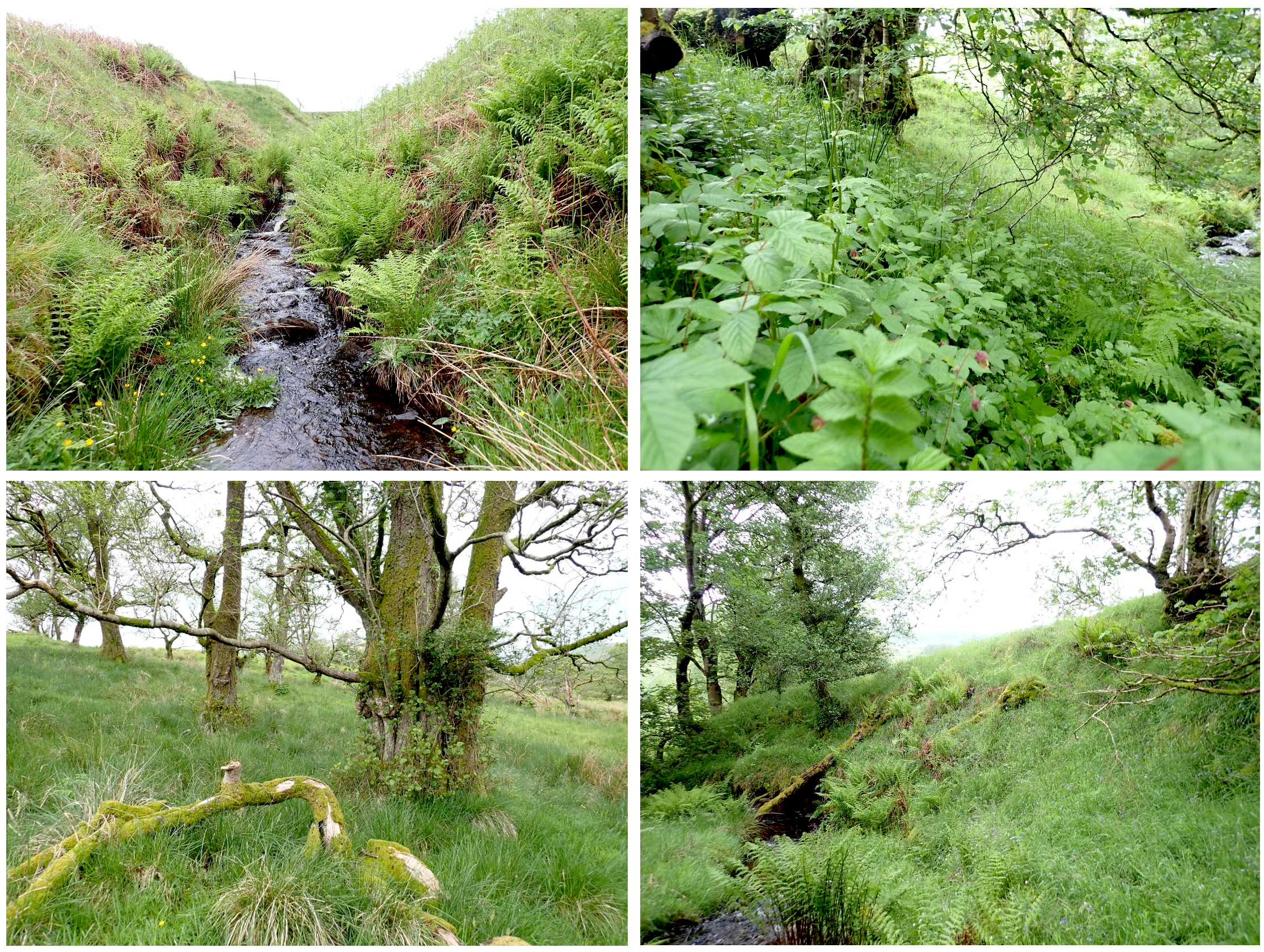
In depth NVC surveying by ecologists Ben and Alison Averis classified the woodland habitats in Dairy Wood as mix of W7 Alnus glutinosa-Fraxinus excelsior-Lysimachia nemorum and W11 Quercus petraea-Betula pubescens-Oxalis acetosella woodland. Dairy Wood arose due to changes in land management in the late 18th and early 19th century, when small tenant farms at Ericstane were amalgamated into one large improvement era farm unit. Species such as alder, birch, rowan and hazel naturally colonised the previously small, arable fields and become what is now Dairy Wood. Alongside this, more commercially valuable species such as oak and ash were managed along the field margins.
3. What are the characteristic features? Significant progress made.
Synthesis of the dendrochronology analysis, woodland walkover survey by P Quelch and ecological surveying by botanists Ben and Alison Averis identified the characteristic features of the woodland. Alongside the open grown veteran trees a mix of M23 rush pasture, M27 tall herb fen, MG5 meadow and pasture, U19 Thelypteris limbosperma-Blechnum spicant community and MX neutral small sedge mire were identified.
4. What is its current ecological condition, and what ecological features, if any, are missing? Significant progress made.
Current ecological state is good, notable plants and plant communities identified.
5. Understanding of ecological baseline to improve ecological condition. Identifying missing species and processes. Significant progress made and ecological baseline recorded.
Elm Ulmus glabra identified as a missing species by Peter Quelch, and surveying by Tweed Ecology. Native crab apple Malus sylvestris also identified as a missing species.
6. How can the woodland’s ecological condition be improved? Significant progress made.
Elm and crab apple will be planted as part of the Royal Botanic Garden Edinburgh’s Scottish Plant Recovery project, seasonal grazing by cattle will continue.
7. Dissemination of research to appropriate bodies and through internal and external publications (various)
How have the results been used?
The following has been acheived during the reporting period: a multi stranded woodland history report by Dendrochronicle; in-depth NVC classification by ecologists Ben and Alison Averis; and the installation of cactus guards by BFT volunteers, on representative sample of natural regeneration.
- Research shared in an article in BFT’s in house magazine The Greenshed, which is sent to 650 members and shared at events.
- Research article shared in Reforesting Scotland magazine here.
- Research article in Scottish Forestry journal, Spring 2025
- Research shared at a dendrochronology workshop led by Borders Forest Trust and Dendrochronicle on the 7th of June 2025 at Corehead.