
Notes from Vienna: Agrilus Beetles and Europe’s Forests
Posted on
Earlier this year, the Scottish Forestry Trust was pleased to support Katy Dainton of Forest Research in attending the EPPO–FAO–REUFIS conference Safeguarding Forests in Europe: Emerging Risks of Agrilus Wood Borers in Vienna. In this blog post, Katy looks back on the conference and lessons learned.
EPPO–FAO–REUFIS Conference, Vienna, April 2026
Katy Dainton, Forest Research
Thanks to support from the Scottish Forestry Trust, I had the opportunity to attend the EPPO–FAO–REUFIS conference Safeguarding Forests in Europe: Emerging Risks of Agrilus Wood Borers in Vienna this April.
My trip began with a delayed flight and a sprint through Schiphol Airport to catch my connection, before finally arriving at my delightfully quirky hotel in Vienna, complete with a rooftop boat and a space-age caravan in the garden. The conference itself was held at the Austrian Research Centre for Forests (BFW), next to the beautiful Schönbrunn Palace Park.
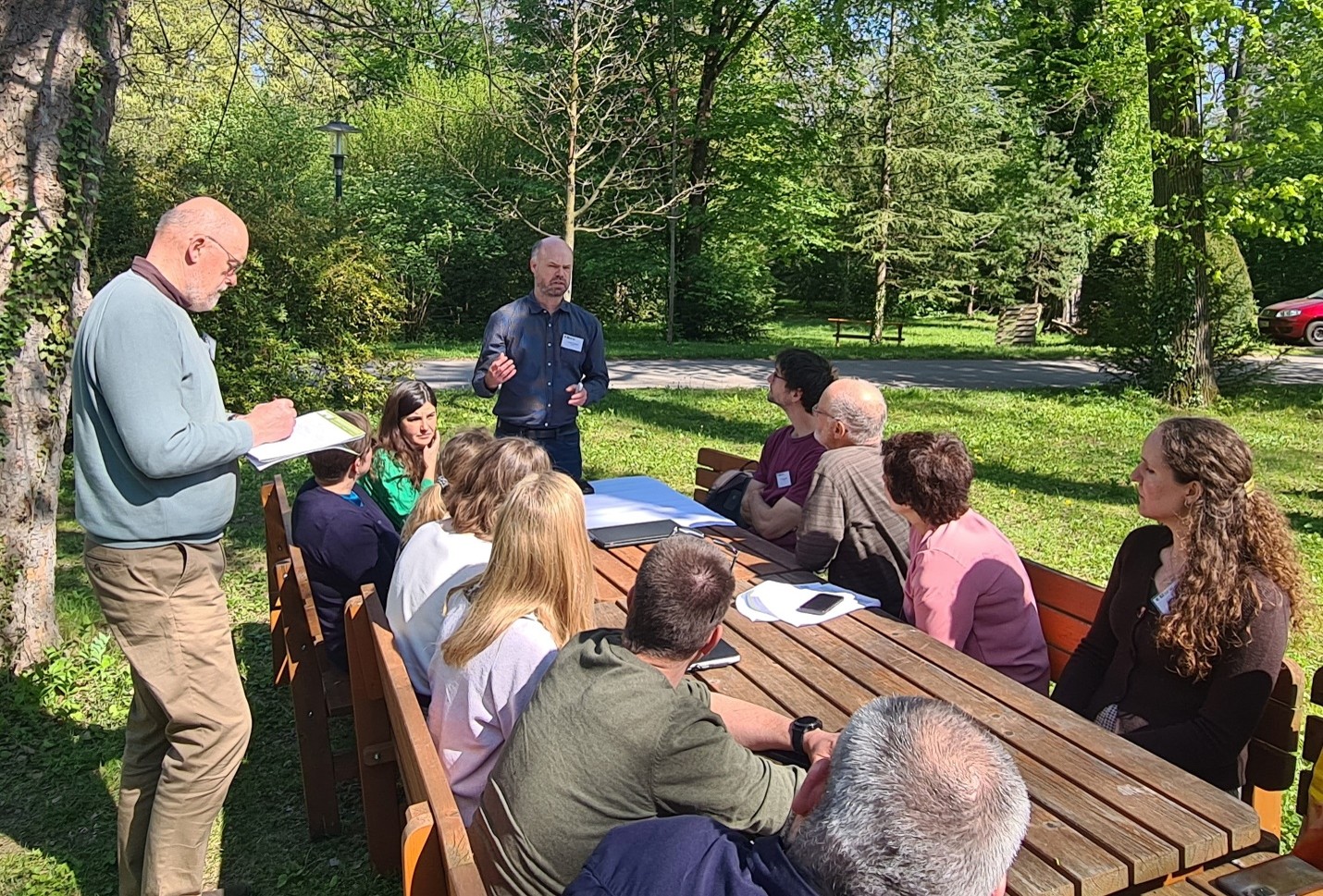
Image source: Joint Conference EPPO, REUFIS and BFW: 'Safeguarding Forests in Europe: Emerging Risks of Agrilus Wood Borers (Buprestidae)‘'
The meeting brought together more than 130 participants from across Europe and beyond to discuss the growing threat posed by Agrilus beetle pests, particularly emerald ash borer (EAB, Agrilus planipennis). Through keynote presentations, talks, posters and discussions it became clear that the risk of Agrilus pest arrival, establishment and subsequent damage is increasing, while detection remains challenging. The continued planting of ash trees in parts of Europe, despite the recognised threat from EAB, highlighted the need to reassess current approaches and improve communication between scientists, policymakers and land managers.
The logistical and political difficulties associated with tracking and researching EAB outbreaks in Russia, Belarus and Ukraine were also widely discussed. Since the conference, the first EU detections of EAB have been confirmed in Hungary and Slovakia, underscoring the rapidly evolving threat this pest poses to European ash trees while also presenting new opportunities for monitoring and research.

EPPO_2026_©florian_winter-18
Reasons for attending
This conference provided an excellent platform for Forest Research to showcase its entomological research to an international audience and explore opportunities for future collaboration.
In particular, the conference enabled me to present a poster summarising the Scottish Plant Health Centre project (2021–23), “A preliminary investigation into the threat of Bronze Birch Borer (BBB – Agrilus anxius) for Scotland”. Given the cold tolerance of BBB and its potential threat to ecologically important native UK birches, which are especially abundant in Scotland, the conference provided an opportunity to discuss this pest, identify future research opportunities, and consider the implications for forest management and plant health preparedness.
Key points from the conference
Several presentations highlighted the significant challenges associated with detecting Agrilus species, including EAB, during the early stages of infestation. . Despite the development of species-specific traps and lures for EAB and other Agrilus species, such as bronze birch borer (BBB, Agrilus anxius), their effectiveness can be limited, particularly when pest populations are at low densities.
As a result, speakers emphasised the importance of targeting surveillance efforts at high-risk entry points, including transport hubs and urban areas, where invasive pests often first establish. Evidence presented at the conference reinforced the role of global trade as a major pathway for pest introductions. In particular, the movement of wood products, including firewood, logs and wood chips, can facilitate the long-distance dispersal of Agrilus species and increase the risk of new introductions.
Several speakers suggested that the continued expansion of EAB across Europe may now be unavoidable. Climate suitability models indicate that large areas of the continent, including parts of southern Britain, could support EAB populations. In this context, delegates discussed the long-term viability of continuing to plant European ash (Fraxinus excelsior). Particular attention was given to urban environments, where Asian ash species may offer more resilient alternatives and where non-native tree species are already commonly used for amenity planting.
A recurring theme throughout the conference was that eradication is often unrealistic once EAB becomes established. Consequently, discussions focused on whether prevention efforts and outbreak response plans should shift away from eradication and towards impact reduction. This could mean prioritising actions that slow pest spread, protect high-value trees, and improve the resilience of affected landscapes.
Emerging evidence also suggests that natural enemies may play an important role in regulating EAB populations. In parts of Russia, native parasitoids have switched host and significantly reduced EAB numbers. However, the extent to which natural enemies might provide similar regulation in the UK remains uncertain, particularly given the relatively limited diversity of native Agrilus species and their associated natural enemies. While the intentional introduction of biological control agents remains a possibility, it is a complex and carefully regulated process.
Other Agrilus pests discussed at the conference included Agrilus biguttatus, which is associated with acute oak decline (AOD), and bronze birch borer (BBB). Researchers highlighted ongoing work to understand why BBB appears to be less invasive than EAB and to determine whether resistant birch genotypes could contribute to future management strategies.
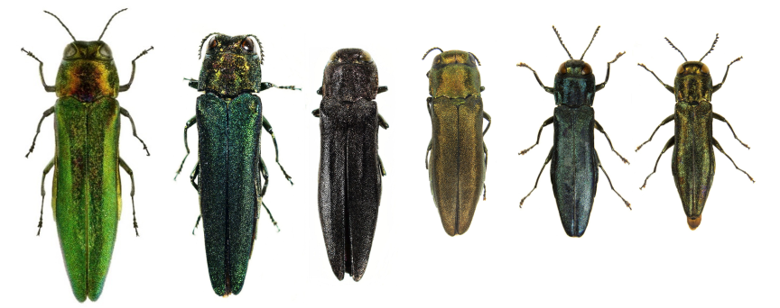
Image source: Joint Conference EPPO, REUFIS and BFW: 'Safeguarding Forests in Europe: Emerging Risks of Agrilus Wood Borers (Buprestidae)‘'
Bigger picture
Climatic pressures, including record-breaking temperatures, prolonged droughts, and increasing wildfire activity, are amplifying tree health threats across Europe. The management of forest pests, including invasive Agrilus species, mist be considered within this broader environmental context.
For EAB, the greatest challenge is no longer understanding the threat itself but ensuring science, policy and practical management responses remain aligned.
The conference provided a valuable opportunity to hear about the latest research, exchange ideas with colleagues from across Europe, and reflect on how preparedness can be improved. It was a thought-provoking few days and a timely reminder that protecting our forests depends as much on people, planning and communication as it does on the pests themselves.
More information, including conference presentations and recordings, is available at:
https://www.eppo.int/MEETINGS/2026_meetings/conf_agrilus
Links to further information about Agrilus pests:
Emerald ash borer beetle (Agrilus planipennis) - Forest Research
Bronze birch borer (Agrilus anxius) - Forest Research
Two-spotted oak buprestid (Agrilus biguttatus) - Forest Research
Agrilus fleischeri - Forest Research
Two-lined chestnut borer (Agrilus bilineatus) - Forest Research