
An Analysis Of Directional Vulnerability In The New Forest
Posted on
The Scottish Forestry Trust recently supported Bangor University student, Sarah Wild in attending the International Association of Wildland Fire’s conference in Calgary, 20-23 October 2025, to present a poster of her Master's research. In this blog post, Sarah reports on the conference and the insights gained from the experience.
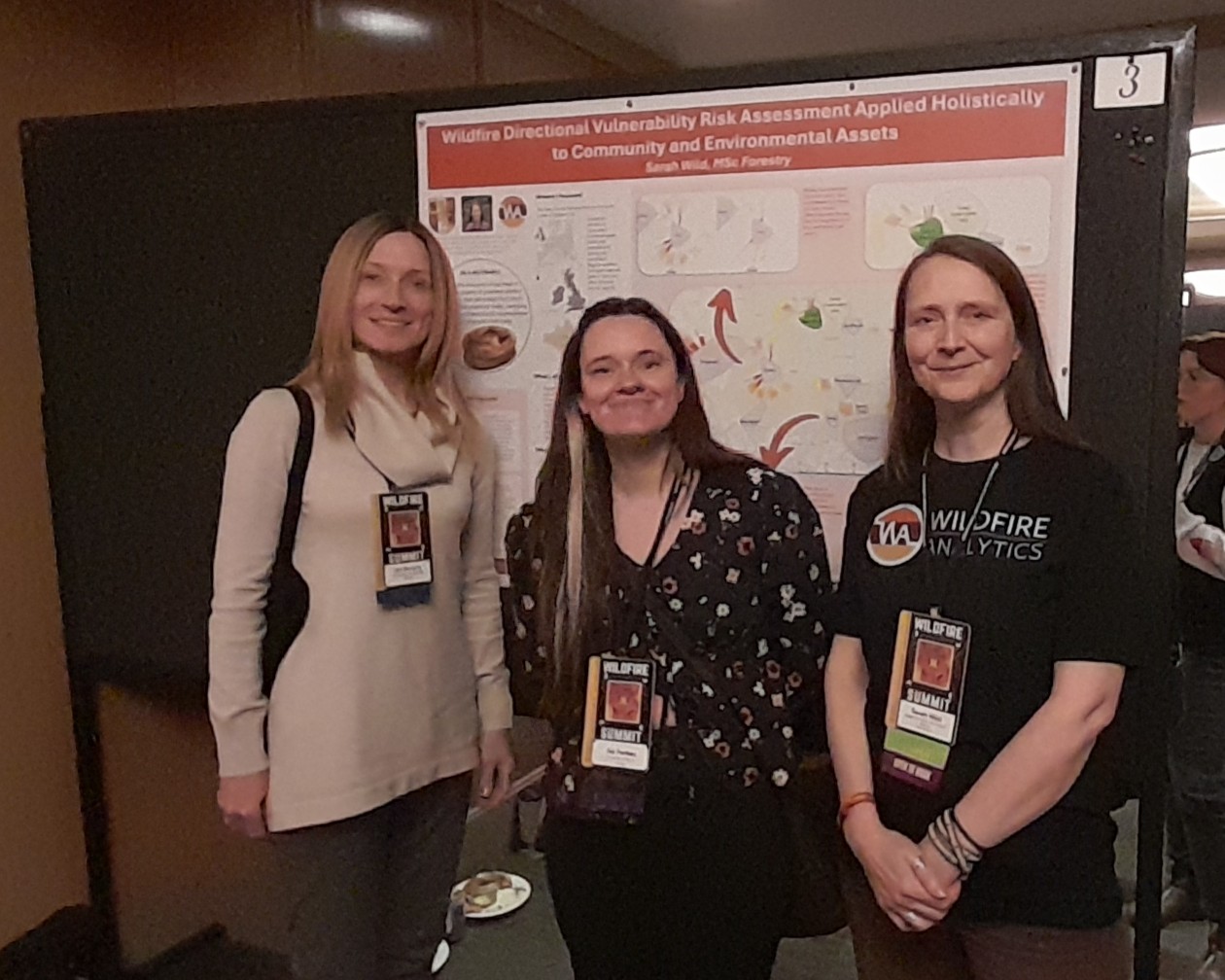
From left to right. Dr Jen Beverly, Air Forbes and Sarah Wild.
In October 2025, I travelled to Calgary, Canada, to present my MSc Forestry dissertation research at the joint 18th International Wildland Fire Safety Summit and 7th Human Dimensions of Wildland Fire Conference, organised by the International Association of Wildland Fire. My attendance was generously supported by The Scottish Forestry Trust.
My research explored whether the wildfire exposure and directional vulnerability assessments, developed in Canada by Dr Jen Beverly and Air Forbes at the University of Alberta, could be adapted for use in the British landscape. These assessments help managers identify how surrounding vegetation influences the potential for wildfire to reach a valued site such as a forest or community, allowing fuel treatments and landscape planning to be more targeted. My findings showed that, although the tool was designed for the Canadian boreal region, it can be statistically validated and applied in temperate British forests with adjusted parameters.
At the conference, I presented a poster on my analysis of directional vulnerability in the New Forest National Park, extending the method for the first time to environmental assets such as conifer plantations and Special Areas of Conservation. The event provided invaluable opportunities to discuss the research with both academics and practitioners, and to strengthen links with the Canadian wildfire community.
Conference highlights included a welcome by Blackfoot Elder Mike Bruised Head, a workshop on Canada’s Wildland Fire Risk Assessment Framework, and a field trip to Banff National Park to see wildfire and prescribed-burn areas. Hearing from Blackfoot representatives and the Banff Fire Chief deepened my appreciation of wildfire’s ecological and cultural dimensions.
The experience has strengthened my professional confidence, expanded my international network, and reinforced my commitment to helping UK forest managers prepare for a changing climate through robust, evidence-based wildfire risk assessment.