
Peebles Wood Market and Tree Festival
To support the Peebles Wood Market and Tree Festival, a community organised two day event to be held in October. The event is to be a celebration of the woodlands and forests of South Scotland that communicates and highlights the benefits, opportunities and challenges facing forestry and woodland management.
This will include hosting the Scottish Conker Championships, chainsaw carving, wood turners and furniture makers, information on deer management and venison, other non-timber forest products, policy and grants for woodland management and new woodlands, environmental and conservation benefits, talks and presentations and information on careers and jobs in forestry and conservation. There will also be family activities and locally produced food available.
Landscape scale lowland deer management
The aim of the project is to increase understanding of deer and deer management in order to write and assess effective Deer Management Plans. Under the Forestry Grant Scheme, and as a result of the adoption of the new UKFS, deer management plans will now form an important part of grant applications and Long Term Forest Plans. This project will increase understanding of how to write and assess these plans, with a focus on how deer numbers and impacts are monitored and will also give some practical experience in deer management.
Wildfire exposure and directional vulnerability assessments
The Scottish Forestry Trust supported Bangor University student, Sarah in attending the Wildland Fire Canada Conference in New Brunswick, 28 October - 1 November 2024. Sarah was keen to participate in a workshop entitled 'Wildfire Exposure and Directional Vulnerability Assessments: Methods and Applications' led by Dr Jen Beverly and Air Forbes of the University of Alberta, Canada. The assessment method, subsequent discussions and insights gained will greatly aid Sarah's research and MSc dissertation.
Ancient Slope Alder Wood Pasture: Integrated case study for restoration
Borders Forest Trust (BFT) proposes to carry out an innovative, integrated ecological and historical case study of an ancient wood pasture on our site at Ericstane, near
Moffat. This will inform a management plan for robust, sensitive ecological restoration.
The case study will synthesise four elements: historic map analysis, specialist woodland walkover, dendrochronology study and in-depth ecological surveys, allowing for restoration and expansion of a slope alder wood pasture, a rare surviving habitat in southern Scotland.
BFT will use its platform to publicise and disseminate the learnings from this integrated study, to further facilitate restoration and showcase best practice. This work will promote collaboration in an upland context where “Wood pasture may offer a structure that can reunite forester, farmer and naturalist in restoring and maintaining a valued habitat and a sustainable multiple land use.” (Stiven & Holl)
Small Scottish Tree Nurseries: Phase 1
The main objective of the project is to bring the key representatives from small-scale native tree nurseries located within the more remote locations of Scotland, including the Western and Northern Isles, and representatives from associated organisations together. In turn, with the aid of a facilitator, the structured day in the form of a workshop, will aim to enable discussion and highlight areas that may benefit from co-ordinated support, for example education, training or research.
Expected outcomes could be the delivery of clear pathways to improving the effectiveness, scope, scale and efficiency of small native nursey production in Scotland.
Built by Nature: Sharing value chain stories to facilitate change
If we are to seriously increase woodland management in the UK and homegrown timber into construction, increasing the volumes of carbon stored in the built environment, cross-industry knowledge sharing and open discussion is vital. We will use the creation of richly visual and compelling media (video, animation, writing, narration) to act as a catalyst to join up stakeholders to discuss current issues, techniques, and innovations. This project will bring lessons from across Europe in forest management and construction to UK specific contexts through its matching with Built by Nature (BbN) funding. The media will act as a vehicle to spark deeper debate and forward-looking panel discussions on the current and future possibilities of UK timber in construction and resilient woodland management practices. Support from SFT will extend this work and enable a number of podcasts based on the above to be developed.
Creating Canopy: the biology and practice of establishing trees and woodlands for people and nature
The AAB ‘Applied Tree and Forest Biology’ specialist group is organising this three-day conference at the University of Nottingham in November 2023. This event has two phases. Firstly a two-day conference will shine a light on new and emerging priorities, latest research and technical advances related to creating canopy. Secondly on day 3 they will host a workshop co-organised by the FraxNet Ash Network. Delegates are invited to join for one, two or three days, either in-person or virtually. Support requested to fund early career professionals to attend.
Quantifying the Magnitude and Duration of Tree Water Stress
Drought-induced, radial-longitudinal stem cracks are a consequence of meteorological drought. Sitka spruce stands in North-East of Scotland have been reported to have suffered cracks due to hot and dry summers. Since then, these areas have been classified as high drought risk mainly because of their freely-drain soil. However, very little is known about the physiological water stress trees are experiencing. This project will quantify the magnitude and duration of water stress of the soil-plant-atmosphere continuum of Sitka spruce in two locations to evaluate the role of water stress in stem cracks. The researchers will use the latest technology in the "Internet of Things" sensors with a newly developed method of quantifying water stress based on electric circuit theory. Evidence will be proviedd for areas where trees are experiencing water stress, leading to potential stem cracks.
The Environmental Impact of Horse Logging in the UK
This research looks to value the lay knowledge of professional horse-loggers in the UK. This knowledge type, alongside local and indigenous knowledge, has growing recognition by the international scientific community in supporting climate change mitigation and adaptation. Themes will emerge from the data which will provide insight into the practice and could potentially highlight UK specific sustainability considerations for the future of forestry operations within the UK.
Working Woods for Foresters
Working Woods for Foresters is a two-day training event that offers foresters and woodland managers a unique opportunity to increase their knowledge of how to grow and manage deciduous trees for the production of hardwood timber. It will bring together a group of participants from across the sector and promote knowledge sharing and networking.
The content is based on a highly successful three-day course run several times by ASHS for a wider range of professionals; in targeting forest managers, the course will focus on key aspects of silvicultural management for managing broadleaf woodland for timber. This will help delegates capitalise on the increasing opportunities for hardwood production, diversify their practice and grow a network of colleagues to collaborate with.
Efficacy of One-Way Hare Structures in Woodland Areas
This project aims to investigate the effectiveness of one-way structures in allowing hares to escape from fenced woodland enclosures. This will be done through implementing innovative exit structures to allow for the safe passageway of hares, and to subsequently monitor the use of the structures by hare species through the implementation of camera traps. This will allow for a greater insight into the behaviour of hare species, and into the practicality of exit structures in protecting newly planted trees against hare damage. Furthermore, this will set a precedent for greater research into more effective alternatives to hare management within the forestry industry.
Voices of the Forest Reprint
The purpose of this project is to support a reprint of 'Voices of the Forest' which was originally supported by SFT. This book, published in 2016, tells the fascinating story of the human side of Scottish forestry, drawing heavily on the thoughts, experiences and reflections of over 120 individuals from all levels and sectors of the industry as it developed over the last 100 years. The book is in full colour throughout, with 230 images, 15 maps, and is 360 pages in length, including a detailed index. It was well received, and the first print run of 1000 copies sold out in 2018, i.e. over a period of three years. This reprint will ensure that the book is again available for the public to buy.
Working Woods Scotland Course 2022 & 2023
The Working Woods Scotland (WWS) Course is a 3-day training event that brings together professionals from across the homegrown Scottish Hardwood (and premium softwood) industry; from foresters and woodland managers, to sawmillers and woodworkers. WWS course content covers all aspects of the industry, teaching attendees about silvicultural practices for hardwood production, grading and valuing standing timber and round logs, hardwood processing (such as milling and kilning practices), and finding a market for your hardwood timber products. The course is also designed to help build links with other professionals in the industry, increasing mutual understanding and encouraging trade and collaboration across the industry to its (and their individual businesses) benefits. Funding will be split over 2 years to help fund the WWS courses that are scheduled to run in Autumn 2022, and 2023.
The Economic and Social Benefits of Native Woods
The project will work with 4 Scottish community woodland groups who own or manage native woodlands to develop a suite of case studies which identify and showcase the economic and social benefits delivered by current and planned management operations.
In addition to highlighting the specific benefits of native woodlands for their respective communities, the project is intended to:
- facilitate greater awareness of the potential economic and social benefits of native woodland management;
- increase understanding of the role and value of community woodlands amongst decision-makers across a wide range of agendas;
- provide effective promotional tools for the community woodland sector, increasing individuals’ awareness of the value of both woodlands and community ownership.
Hylobius Industry Research Programme Conference 2022
The HIRP Conference intends to provide an industry update on the current Hylobius control options available to forest managers, an overview of the research and trials currently underway and those planned which look at alternatives to the current main control method (of acetamiprid applications), discuss the FSC pesticide policy and the requirements outlined in the acetamiprid ESRA, as well as introducing the SFT Hylobius fund.
It is anticipated that the event will highlight the constraints which current Hylobius control methods pose to the sector and encourage funding and support into finding alternative controls, particularly through contributions to the SFT Hylobius fund.
The group aims to run the event at the Birnam Arts Centre in Perthshire in April 2022.
Woodland to Workshop Course - Scotland 2021
This 3 day training course brings together young forestry professionals from across the homegrown hardwood (and premium softwood) industry (foresters, sawmillers, woodworkers, etc.) to learn about all aspects pf the industry, and to build links with other professionals, incresaing links, mutual understanding, trade and collaboration across the sector to its benefit. This is the firts Woodland to Workshop course to be held in Scotland and the first to be organised by ASHS. The course has been run successfully in England on 26 occasions by Woodland Heritage. Initially planned for delivery in 2020, the course will take place in October 2021.
Use of Trees by Bats: Implications for Forestry Management
That bats use tree roosts is well known, but what appears to be under-appreciated is that bats are often found in ‘roosts’ in very small ‘weedy’ trees that foresters may consider unworthy of investigation. This clearly has huge implications for forestry practice. This award will allow us to analyse the Bat Tree Habitat Key (BTHK) data (an open source database contributed to by bat ecologists across the country) to describe the types of trees (species, size, characteristics) and tree features (entrance size, tree position) used by bats as roosts. An important part of this project will be to publish and publicise our findings, to provide an evidence base for related practice/policy recommendations, and to raise awareness of the issue.
Nutrient Cycling in Upland Forest Soils
The project will use a selection of fieldwork and laboratory techniques to improve understanding of how the biological communities of upland soils cycle nutrients and remain productive, possibly illustrating the suitability of upland soil types for forestry applications. Genetic material sourced from soils across the Scottish Highlands will be gathered and sequenced using next generation sequencing technologies, providing novel insights into the biological communities beneath our feet. A series of experiments will then be conducted to determine exactly how these communities retain nutrients within forest ecosystems subject to high rainfall. The results of the project promise to give exciting insights into how the soils of production and conservation forestry can be managed for optimum productivity, either improving yields or developing the ecosystems upon which Scottish wildlife depend.
Pilot Initiative to Inspire Future Foresters via STEM Activity in Schools
This is a partnership initiative between Confor and the Scottish Council for Development and Industry (SCDI) to expose young people to the range of opportunities that exist within the forestry and timber technologies sector via STEM club activity in schools. The pilot is planned to last 3 years in the first instance and will target S1-S3 pupils in the Highland Council area on two programmes - Climate Smarter and Highland Celebration of Engineering starting in the Academic Year 2021/2022. Climate Smarter involves pupils engaging in a project around future schools and a resource pack on use of homegrown timber in buildings will be integrated into this successful SCDI programme. The partnership and initial engagement with schools will focus around an event linked to COP26.
SCDI have access to over 1600 primary and secondary schools across Scotland via their Young Engineers and Science Clubs and they operate a number of initiatives and competitions to excite and engage young people of all ages.
Wild Service (Sorbus torminalis) Provenance Trial
The trial objective is to test different provenances of S.torminalis for survival, growth and stem quality in order to provide recommendations for silvicultural practice. Scottish Forestry Trust’s support for the trial will enable the creation of a survey protocol that will then guide measurements and monitoring to be carried out at regular intervals during the first phase of this project, with survival and early growth analysed after one, two and three years. By the end of the first phase, there will be clear outcomes emerging as to the best performing provenances out of nine selected from the UK and Europe. These results will be disseminated to industry bodies and publications directly and online for wider consumption, representing the only provenance trial for Wild Service Tree ever to have been undertaken in Britain, which will help raise the profile and potential of this under-used but potentially remunerative hardwood.
Developing a Research and Development Prospectus
Building on recent work, the aim of this support is to help facilitate two industry meetings in Spring 2020 to discuss and prioritise Forest Industry Research and Development needs that may, in future be supported through any industry led fund. The events will be in Scotland and England and will completed by May 2020.
Securing good quality acorn material in the UK
The ‘Boom and Bust’ (masting) patterns of acorn production have significant economic impacts: it results in an unreliable annual supply of well-adapted and high-quality acorns to forestry, while there is a high demand every year. Shortages are problematic since recalcitrant seeds cannot easily be stored, imported seeds may be of an unsuitable provenance and pose biosecurity risks. The aim of this doctoral research is to investigate the highly variable acorn production by native oak in the UK, so as to inform seed supply industry and seed stand management.
It will aim to answer the questions:
1. What is the (historic pattern) of masting and mean acorn production in the UK at the seed zone level?
2. When, and at what phenological stage is seed development currently halted (i.e. what are the premature abscission rates at each phenological stage)?
Improved pretreatments and fractionation of soft and hardwoods to access feedstock chemicals
Whilst current approaches to the use of wood are highly optimised and integrated, novel technologies can be developed that further improve the efficiency of use of all the possible product streams. The current use of LIGNIN derived from wood is to burn it and this represents an inefficient use of this potentially valuable resource. It is desirable to convert wood into a set of product streams that can be used for several different applications.
One of these streams should be a high quality Lignin, whilst other streams should contain cellulose and hemicellulose-derived sugars. Current methods of isolating high quality lignin from (i) Sitka spruce and (ii) mixtures of soft and hardwoods can be improved. After isolation from the wood, it will be advantageous to purify (fractionate) the Lignin before attempts are made to convert it to feedstock chemicals. The proposed programme of work builds on these assumptions.
An Interview with George Stewart (born 1919): A century in forestry
The former Forestry Commissioner, George Stewart, in 1919, some 3 days after the first tree was planted by the newly formed Forestry Commission. After service in WWII he became a Forestry Commissioner. George’s forestry career covered the great post-WWII expansion of forestry, the development of innovative forest research and technical development, the rise of the private forestry sector, the expansion of recreation and conservation objectives (in which he had a significant part), and the devolution vote in Scotland in 1979 and its potential implications for forestry governance. He will thus turn 100 at the height of the FC centenary. As part of the commemorations of this centenary, it is proposed to record a video of George who is uniquely placed to describe his life in forestry in the 20th century.
Untapped Provenances of Sitka spruce
This project will focus on providing information on Sitka spruce by directly measuring relevant traits on a mature forest trial of 25 Pacific Northwest origins of Sitka spruce growing in northern Scotland. These traits are: growth, wood stiffness, wood density and tree ring characteristics related to drought vulnerability. A rapid, preliminary study at the project site in 2019 has indicated that important differences could exist and more reliable time series measurements are now sought with this proposal. The variation within and between seed origins will be compared for the measured traits and the findings used to inform planting strategies and to guide the future breeding of Sitka spruce in the UK.
Addressing uncertainty to improve urban tree management
Eighty-percent of the UK population live in towns and cities. Urban trees provide numerous benefits to urban society, including air pollution removal, building energy conservation, urban climate regulation, and access to nature. Urban tree managers and government agencies are interested in assessing the magnitude and socially equitable distribution of urban tree benefit delivery, and building resilience under a changing climate. However, a national picture of urban forest cover, composition and quality does not exist. At the city scale, such information is occasionally available through local uptake of “i-Tree” tools.
This project aims to critically examine urban forest sampling protocols with a view to optimising i-Tree Eco surveying. By clarifying the surveying effort required and maximising output accuracy the project aims to increase the opportunity for cities to gain the inventory data required for evidence-based policy creation, and development of management strategies that maximise delivery of tree benefits to urban society.
Alternative techniques for managing Hylobius abietis
The large pine weevil (Hylobius abietis) is the most serious pest of newly planted or naturally regenerating woodland trees on restocking sites in Scotland and the rest of the UK and Ireland.
The need to find alternatives to the use of existing insecticides or a fallow strategy have led to a 10 year, collaborative research effort across the UK forest industry involving Forest Research, UPM Tilhill, Maelor Nurseries, Forest Enterprise England, Forest Enterprise Scotland, Natural Resources Wales, the Northern Ireland Forest Service, Coiltte, Confor, Scottish Woodlands, and Swansea University, along with a range of other important stakeholders.
This research investigated a range of innovative techniques for the integrated management of Hylobius abietis.
The objective of this Scottish Forestry Trust project is to produce a number of open access, independently peer reviewed scientific papers to report on this research, and to provide an evidence base for decision makers in the sector considering options for managing Hylobius abietis, and for stakeholders interested in the rationale for current forest practices.
Developing an Industry Contribution Mechanism
A number of current and emerging issues, such as the declining availability of funding for research, the fracturing of the Forestry Commission, reliance on public sector funding which does not always lead to commercially quantifiable outcomes, and a move by government to a ‘Responsibility and Cost Sharing’ model for the setting of priorities and funding of projects of joint interest, provide both a driver and an opportunity for the creation of an Industry Contribution Mechanism.
The purpose of the Fund would be to raise funds to support industry research and promotion, market information and skills development. The industry has a record of supporting these activities but on an ad hoc basis, which makes long term planning and strategic development problematic.
This project will build on initial scoping work undertaken by the applicant. It will provide options for the raising, administration and distribution of funds, consult with industry and potential recipients on the implications of these options, and make recommendations as to the optimum outcome.
MySafety App: mobile technology applied to improve Forest Safety
Safety culture is the product of individual and group values, attitudes, perceptions, competencies and patterns of behaviour that determine the commitment to an organisation’s safety management. Therefore, as a result of assembling more comprehensive data in real-time data, the project will drive a fundamental advance in the industry’s safety culture, so improving safety practices and training which, in turn, will reduce the numbers of incidents and fatalities.
The key objective of the project is to replace ineffective, out-dated, paper-based processes by deploying low-cost, smart technology to operators in the forestry industry so that they can record incidents more easily, be assured of their personal safety and respond to periodic questionnaires which will provide the industry with its first ever holistic assessment of its safety culture.
Support for attendance of early career scientists at IUFRO 2019 World Congress
The objectives of this proposal are to facilitate the attendance of some talented UK scientists and in doing so to: -
Provide opportunities for early career FR staff to engage with the international research community at the IUFRO World Congress in 2019 to gain new knowledge, lay the foundation for new collaborations, and promote the work being undertaken in UK and
- Provide the UK forestry sector with insights from the premier global forestry research conference.
The conference is to be held from the 29th September 2019 and a report and trade articles will be produced from the visit.
Digital Quarterly Journal of Forestry: Early Years
The RFS are creating a free-to-access digital record that charts the history of Forestry in England during World War I and in the challenging period immediately following the war. The record will be created by scanning and collating volumes of the RFS ‘Quarterly Journal of Forestry’ dating from 1914 to 1920.
These volumes document the solutions that people within the forestry sector employed to solve many of the economic, environmental and sustainability problems that arose during this challenging time. This will then be uploaded to the RFS website, were it would provide a searchable, free to access historic record that is not available elsewhere.
The multi-trophic consequences of ash dieback – a baseline survey of Wytham Woods
European ash has become the latest victim to the fungal pathogen (Hymenoscyphus fraxineus) responsible for ash dieback. Ash is the third most abundant broadleaved tree species in British woodlands and the disease is therefore expected to have a major impact on woodland ecosystems.
Ash dieback has recently been detected in Wytham Woods, Oxford’s iconic ecological observatory where many of the foundations of modern ecology were laid. Thanks to years of research across many areas of ecology, Wytham is probably the only place in the world that is positioned to track the full ecological consequences of the disease.
In this study we aim to gather baseline data in low and high ash areas of Wytham Woods before the impacts of the disease become prominent. These data will be used to apply for funds to track changes due to ash dieback which may be used to inform woodland management in the UK.
Career paths and Education Provision for Forestry
While there is some indication of factors that may influence young people’s career choice in forestry, there have been no in depth studies looking at forestry as a career choice, or the key trigger points in the decision making process in the UK. This proposal, therefore, addresses that gap. Extensive longitudinal research undertaken in relation to, for example, the Science Technology Engineering and Mathematics (STEM) education fields suggest that understanding and influencing post 16 career choices and paths requires in depth knowledge and understanding of young people's aspirations and attitudes towards specific disciplines /fields as well as information on how they acquire such knowledge and attitudes.
. With respect to forestry the UNECE/FAO (2006) report using data from Germany, UK and Nordic countries, suggested that “career advice on forestry is at best ambivalent and at worst negative”, a view also reported in New Zealand. The UNECE/FAO report looking specifically at gender in forestry and suggested that childhood experiences in nature has a significant influence on career choice in forestry, particularly for young people having positive experiences through living close to, or visiting, forests.
This proposal builds on the notion of an ecological model' (see CEIC 2008) of young people's career choice journey. This model emphasises the importance of taking into account the varied and dynamic experiences, influences and relationships that shape young people's aspirations as they navigate through schools in making career choices.
Assessing the risk of chemical runoff following use of Gazelle SG as a pre-treatment and top-up spray in forestry.
Despite significant and continuing progress in the development of non-chemical methods for controlling the large pine weevil (Hylobius abietis) in restocking situations, on some sites there still remains a need for insecticide treatment to prevent catastrophic damage to replanted trees. Acetamiprid is increasingly being used in UK forestry as the primary insecticide treatment for protecting young trees from damage by Hylobius abietis, because it is more than 400 times less toxic to the aquatic environment and to bees than the insecticides it replaces.
However, whilst the additional evidence based precautionary measures that are routinely employed for all insecticide treatments in forestry are considered to be more than sufficient to fully protect the freshwater environment from any contamination, up until now the use of acetamiprid on restock sites has not been specifically monitored.
This project therefore consists of a monitoring study to confirm that there is no runoff of acetamiprid to water following the use of Gazelle SG® (20% w/w acetamiprid) as a pre-treatment and top-spray in forestry. If runoff were to be detected, a further objective of this study would be to recommend changes to forestry practice to minimise risk.
Monitoring and managing genetic diversity in Sitka spruce
This study will quantify baseline levels and changes in genetic diversity during the course of the UK's Sitka spruce genetic improvement programme. Using microsatellite markers, the study will first determine the quantitative measures of genetic diversity in native QCI populations and unimproved commercial stands of Sitka spruce in the UK to estimate any reduction in genetic diversity that occured in the introduction process.
The project will then go on to measure how this introduced genetic diversityhas changed as a consequence of the different tree improvement strategies, either seed orchards or vegetative propogation, employed to produce stock.
The study will provide important information to help guide the future development of the Sitka spruce improvement programme.
Predicting impacts of extreme weather events in UK forests
This research will integrate new and existing tree-ring data on Picea and Pinus species to deliver a predictive understanding of the change in tree risk, resistance, recovery and resilience to drought, in the dominant commercial conifer species in the UK. Industry outputs will include dissemination via forest industry forums, maps, and probabilistic risk and vulnerability functions which will be integrated into the decision support systems (including the online Forest Research DSS system) available and widely used by UK forest managers. Academic outputs will include scientific articles and conference presentations.
Studying a mycovirus from Dothistroma septosporum
Further to recent research supported by the SFT, the research team at Imperial College have identified a D. septosporum isolate harbouring a double-stranded (ds) RNA mycovirus belonging to the family Chrysoviridae. The aims of this research are (1) to provide insight into the effects of the virus on host growth and virulence, and therefore its potential as a biological control agent against Dothistroma needle blight (DNB), and (2) to understand the molecular mechanisms underpinning these effects by investigating the transcriptional and small RNA profile of the D. septosporum isolate in the presence of the virus. Ideally by the completion of the project it should be possible to link fungal growth and virulence phenotypes with specific groups of genes up- or down-regulated in virus-free and virus-infected isolates and propose a RNA silencing based mechanism to explain this differential expression. The research is expected to take up to 2 years.
Assessing the value of secondary woodlands for biodiversity
Woodland creation and restoration are often assumed to benefit biodiversity. However, slow habitat succession rates and time lags in species responses have resulted in a lack of empirical studies assessing the long-term value of these activities. The work proposed in this project will use ancient semi-natural woodlands (250+ years old; usually regarded as high quality habitats for many taxa) as reference sites to assess how secondary woodlands planted over the last century are performing in terms of their value for biodiversity, using moths (a biologically-diverse group and indicator for forest quality and wider biodiversity) as a case study. We will identify key differences in habitat structure between ancient and secondary woodlands and explore how these relate to woodland moth communities.
Using satellite imagery to improve Hylobius prediction
Hylobius can cause significant damage on seedlings, especially on restock sites. Forest Research (FR) is attempting to refine the current Hylobius Management Support System by building models to predict ‘site-to-site’ movements of Hylobius between clearfellings. This relies on an understanding of when movements will occur between ‘sources’ and ‘sinks’ in relation to felling dates.
In this context, satellite imagery will be used to track the location, scale and timing of newly felled areas so that they can be timely categorised as ‘sources’ or ‘sinks’ and linked to the seasonal patterns of Hylobius. To do this, FR is adapting the US Forest Service LandTrendr application to construct monthly estimates of areas being felled using time-series of Landsat imagery complemented with the EU-satellite Sentinel-2. This technique undertakes a web search for the best available pixels that configure satellite images at a particular location. The best pixels are then stitched together to give a Best Available Pixel (BAP) mosaic.
The desired outcomes will be a better prediction of Hylobius forest-scale movement, a minimisation of insecticide inputs and beating up and the reduction of the fallow period.
Future Foresters Sector Skills and Training Research Project for England and Wales
This research will map the current provision of training and skills in forestry in England and Wales, making an assessment of current and future needs, and research barriers to meeting those needs, in order to inform an action plan to address gaps and barriers.
Assessing the value of secondary woodlands for biodiversity
Woodland creation and restoration are often assumed to benefit biodiversity. However, slow habitat succession rates and time lags in species responses have resulted in a lack of empirical studies assessing the long-term value of these activities. The work proposed will use ancient semi-natural woodlands (250+ years old; usually regarded as high quality habitats for many taxa), as reference sites to assess how secondary woodlands planted over the last century are performing in terms of their value for biodiversity, using moths (a biologically-diverse group and indicator for forest quality and wider biodiversity) as a case study. Key differences in habitat structure will be identified between ancient and secondary woodlands and explore how these relate to woodland moth communities. These findings will provide scientific evidence to inform conservation actions and policy aimed at increasing the value of secondary woodlands for biodiversity.
Putting UK Bats on the map
This is a two-year project that will provide a key evidence base for all woodland owners, managers and others with a regulatory responsibility to account for bat species when planning and carrying out woodland work and developing national guidance and forestry strategies.
To make consideration of bats more straightforward and well-informed, habitat suitability modelling (HSM) will provide open access maps that predict the likely presence of bat species in woodlands, alongside information on the underlying ecological and management drivers.
Coupled with the modelling will be the first UK working trial of a woodland monitoring technique designed under contract for Defra. Species data gathered from this trial will be fed into the HSM to test and improve predictions. This trial will inform the development of future national citizen science monitoring techniques under the umbrella of Bat Conservation Trust's National Bat Monitoring programme.
Improving Biodiversity in Lowland Planted Woodlands
Woodlands planted on arable land and improved pasture fail to develop woodland plant communities and remain dominated by grass and agricultural weeds; even in old woods. This severely limits their biodiversity value, including impacts on some invertebrate populations; and reduces the amenity and recreational appeal of the woods.
This can be addressed via careful introductions of missing woodland plant species aimed at simply establishing small viable populations that can colonise the wood over time. There are a few trials of woodland plant introductions in Scotland and England; but none have used this approach and are suitable for long term monitoring and research.
Research Objectives:
a) Establish long term demonstration sites to test the feasibility of introductions, provide evidence of outcomes, refine methodology and seek cost-effective approaches.
b) Arrange training events focused on good conservation management of lowland planted woods.
Outcomes:
1) a paper(s) describing improved management practices;
2) enhanced understanding and professional capacity amongst managers;
3) a long term research resource;
4) a student dissertation.
Mapping impacts of Phytophthora austrocedri in juniper
A key component of resilience of forest ecosystems to pathogens is understanding environmental and ecological processes that favour establishment and spread for effective targeting of mitigation methods.
Such conditions are poorly described for new oomycete Phytophthora pathogens that are damaging forest ecosystems in Britain.
Phytophthora austrocedri is now known to be causing extensive dieback of Juniper, a declining UK Biodiversity Action Plan priority species, in Scotland and northern England.
This project aims to (1) determine how topography, climate, hydrology and host community structure interact to favour disease establishment and spread from field scale to landscape and regional scales (2) understand how conditions favouring juniper population persistence interfaces with conditions favouring disease establishment and (3) develop spatial tools that map P. austrocedri impact on juniper populations for geographical targeting of conservation and biosecurity measures.
Improving the understanding and management of Phoenix Trees
Mature broadleaved trees in Scotland’s windy climate blow over, but a proportion re-root and continue to grow. These become interesting, ecologically important and attractive trees; with considerable appeal to the public. This phenomenon is rarely fully appreciated by woodland managers and phoenix trees are at risk from firewood cutting, browsing and being swamped by bracken. The process may constitute an adaptive response that helps some types of native woodland persist in Scotland’s windy climate and in the face of huge grazing pressure. The objectives of the work are firstly to describe the phenomenon and to evaluate its ecological importance, so as we understand it adequately. This will include carrying out a survey of phoenix trees, recording their distribution, species, sizes, ages, morphological characteristics, the ecology of sites and associated epiphytic species. The second is to raise awareness primarily among professionals (but also more widely), and to encourage better management practices. The outputs will be management guidelines advising on evaluation and protection of trees and a popular article drawing attention to the ecological importance of the phenomenon.
The Ecology and Genetics of Native Scottish Crab Apple
Crab apple (Malus sylvestris) is probably Scotland’s least researched and understood native tree species, and this project sets out to remedy this by providing ecological, genetic and management information. It is a rare but ecologically valuable species that is currently undervalued in forestry. Importantly, the species is known elsewhere in Europe to be at risk from hybridisation with domestic apples – rather like the situation with Scottish wildcat. The objectives of the work are to: a) Carry out an inventory of wild-grown apple trees, recording their morphology and the ecology of the sites and woods they occur in; b) Have an RBGE student investigate the problem of hybridisation and describe genetic variation using micro-satellite markers; and c) Make a collection of scion material from trees which the genetic analysis shows to be true crab apples and establish one or more clonal seed stands. The outputs will be management guidelines, with advice on planting, seed collection and genetic conservation.
Development and Publication of Tree Work Guides
This project creates a suite of supporting technical guides which will provide detailed, practical guidance for arboricultural operatives. Building on the recent development of the Industry Code of Practice for Arboriculture, the guides will describe "industry good practice" and will support training programmes and provide the benchmark standards for a range of practical arboricultural operations.
The guides will be designed to be accessible to operators with high quality photographs and illustrations and will be available during 2018.
The guides will cover
- Tree Access
- Use of Tools in the Tree
- Rigging
- Use of Cranes in Arb
- Use of MEWP's in Arb
Shaping the Future of Forestry
This project helps to support the undertaking of another in the series of British Woodland Surveys carried out by the Sylva Foundation in partnership with Forest Research and the Universities of Oxford and Bangor.
The survey will include engagement of landowners, scientists and policy makers throughout Britain which ultimately will lead to the production of the survey results in 2017, gathering state of the art intelligence about British forestry and will disseminate the results widely.
Epidemiology of Phytophthora ramorum on Larix spp. and host responses to infection
Forest ecosystems in Britain are highly vulnerable to invasive Phytophthora spp., including Phytophthora ramorum, which is causing severe economic losses to larch across the west of the country. This PhD project aims to investigate natural resistance in larch to P. ramorum by studying disease epidemiology and variations in host response. This will enable a greater understanding of the potential to exploit natural resistance/tolerance to P. ramorum in a larch breeding programme.
The specific project objectives are; i) investigate the epidemiology of P. ramorum on larch in SW Scotland, ii) determine whether differences in susceptibility occur between European larch (EL) and Japanese larch (JL) to EU1 and EU2 lineages of P. ramorum, and iii) examine the molecular interactions between P. ramorum and JL and EL in order to identify key host immune responses.
Scottish Forestry - RSFS Society Journal Digitisation
This funding support will help the RSFS to complete the digitisation of the journal "Scottish Forestry" from 2005-2015 and will enable them to be made available for free access throught the Society's website.
Woodland Planting and Natural Flood Management
Woodland expansion is a key objective of the Scottish Government, strategic to mitigating climate change, stimulating economic development and supporting sustainable flood management. This case study based project therefore aims to quantify the contribution of large-scale (up to 50% catchment area) woodland planting for Natural Flood Management (NFM) purpose. Field monitoring of runoff and sediment delivery will be analysed for different cultivation areas (ploughing, excavator mounding, hand mounding, rotary mounding, screefing). Complementary data will also determine the effectiveness of good practice controls (e.g. restricting furrow length/depth; vegetation filter strips; silt traps). Numerical hydraulic models will then appraise how flood risk is altered by planting techniques and controls, including future scenarios for woodland maturation. Outcomes intend to influence the planned Forestry Commission’s ‘Practice Guide’ and SEPA’s ‘NFM Handbook’ on managing forestry for flood risk benefit. Collaboration includes Heriot-Watt University, Tillhill Forestry, Forest Research, Clackmannanshire Council, JBA Consulting and SEPA.
Silvicultural diversity and birds in Scots pine forests
A collaborative study by the BTO, with Forest Research and Forestry Commission Scotland, to discover the effects for bird populations of changes in forest management, from clear-fell rotation to more naturalistic continuous cover forestry. Most of Britain’s forest cover is plantations and their management significantly influences populations of woodland birds at national level. Selected sites will be monitored using timed point counts in stands of different structure representing different management systems. Generalised linear mixed models will be used to analyse data and identify the nature of associations of bird species presence and abundance with forest structure. Field methods will be compatible with a previous clear-fell Sitka spruce study to permit joint analyses. The study will produce guidance on relative gains and losses associated with different systems, to inform Scottish and UK forestry practice, increase biodiversity benefits and possibly lead to a European study to maximise biodiversity within commercially managed forests.
Fraxi Queen of the Forest-a new theatre production for young audiences
This new theatre production is inspired by Ash die-back and mythology of ash trees and is aimed at young audiences principally primary school age.
The story is about change. Change that is the only constant in life. The audience discover the cycles of nature through the story of Fraxi the ash tree and the people connected to her over several generations of one family. Through the story they learn that nothing ever really dies in nature and that everything is always changing. It is a touching story of love, friendship, and resilience.
The project’s aim is to inspire children to care for and learn more about trees as well as raise awareness about importance of protection of local habitats as a way for sustainability of our natural environments.
Support from the Trust is targeted at post production workshops and accesibility costs. At present, the production is expected to tour primary schools in Edinburgh, Fife, Aberdeenshire, East Renfrewshire and the Outer Hebrides.
Ownership effect on benefits from woodland expansion
Despite afforestation over the last 100 years, woodland cover in Scotland remains low in both a historical and European context. The Millennium Ecosystem Assessment provided evidence that over 60% of ecosystem services (ES) are currently being degraded/used unsustainably (MEA, 2005), and biodiversity loss continues, with over 18% of species and 33% of habitats thought to have been lost in Scotland (Hughes and Brookes, 2009). In addition, the challenge of climate change means that species are struggling to adapt, and there is increasing need for mitigation through carbon sequestration, with afforestation being seen as an important way to achieve this. At the same time, there is increasing debate over land reform in Scotland and the implementation of the Scottish Land Use Strategy which aims for responsible stewardship of Scotland’s natural resources to deliver more benefits to Scotland’s people (Scottish Government, 2011).
These challenges present an opportunity to evaluate the impact of previous woodland expansion on ES (Thomas et al. 2015), by assessing how ES vary in different contexts and what trade-offs exist between woodland and other land uses. The recent growth and improvement in methods to quantify ES (ES indicators) means that there is an excellent opportunity to make use of new tools for ES evaluation which have not been used before.
The following research questions will be addressed in the course of this four year PhD:
- What has been the impact of woodland expansion on ES to date?
- How do key woodland ES vary under different ownership and governance types?
- What types of ownership and governance are most effective for achieving woodland expansion and provision of ES?
- What are the synergies and trade-offs between woodland ES and ES from other land uses?
- What are the most sustainable and resilient models of ownership and governance for achieving woodland expansion and provision of ES given alternative climate change and socio-economic scenarios?
Who Will Pay for Urban Forest Climate Regulation Services?
This PhD research project is a collaborative undertaking between the University of Southampton and Forest Research to analyse the extent to which Payments for Ecosystem Services (PES) schemes can promote investment in urban woodlands as a means of minimizing the impacts of climate change in
built‐up areas.
Specific research questions are:
(1) Who is best suited to provide urban woodland ecosystem services?
(2) What is the magnitude of willingness-to-pay (WTP) for these services?
(3) How do time, uncertainty and knowledge affect WTP and thus PES design?
(4) Would a voluntary or institutional PES be more appropriate?
Methods will include a literature review, GIS mapping to identify three case studies, choice experiments with a range of experts and multi-criteria analysis.
Outputs will include the PhD, three journal papers and at least two conference presentations.
Multi-taxa functional diversity in UK plantation forests
This project will determine functional diversity in UK plantation forests. The objectives are to (i) determine changes in species and functional diversity of three taxonomic groups (ground dwelling beetles, ground vegetation, birds) in a chronosequence over a 20 year period; (ii) assess resilience of these taxa to harvesting disturbances across bioclimatic zones and forest types, and, (iii) to determine how spider species and functional diversity are influenced by bioclimatic zone and plantation forest type across the chronosequence. Expected outcomes include long-term (20 years) and large scale (two bioclimatic zones) assessments of taxonomic and functional diversity in plantation forests using a multi-taxon approach.
Emergent forest dynamics and natural flood management
The main aim of the project is to improve the understanding of forests being planted or
conserved in view of mitigating floods, by understanding the development of optimum
characteristics of water flow and storage under three sites: heathland/pastureland,
mature scots pine plantation and ancient Caledonian forest. The study will test two
hypotheses:
1. As the forest develops, the root system of the forest creates macropores and
increases organic matter optimising water flow and storage.
2. Springs develop under mature forests because the forest interacts with and
adjusts to the environment to form perched water tables.
The project will compare the flood mitigation potential of forest plantation, ancient
forest and heathland by measuring in-situ permeability measurements at different soil
depths and investigate the presence of springs within the three sites.
This pilot study will also examine past climate and local disturbance to deepen our
understanding of forest ecosystem resilience.
Re-evaluating rotational upland Sitka spruce mixtures
Drought damage to Sitka spruce in eastern Britain and disease impacts on pine and larch more widely, suggest that total reliance on Sitka spruce monocultures for upland forestry may prove unwise. Introduction or mutation of pests/ pathogens could have critical silvicultural and processing implications. While Sitka spruce endures, commercial growers are reluctant to select less familiar alternatives on a precautionary basis. Deployment of “insurance” mixtures of Sitka spruce and alternative productive conifers, capable of completing the rotation, offers a potential compromise. Key companion species include alternative spruces, Douglas fir, Abies firs and western hemlock. This short project will review the fairly restricted record for these “non-nursing” spruce mixtures in British upland forestry, emphasising silvicultural and wood property comparisons, based on literature review, technical discussions, comparative site-yield analyses and field inspection of relevant stands. Dissemination will be by short technical report/ information guide, articles for the forestry press and seminar presentations.
Mapping and Repositioning Forestry Skills for the 21st Century
The multifunctional role of forestry and the diverse activities which it encompasses, operating across different fields, boundaries and activities is widely recognised as being of central importance to its development in the 21st Century. This project aims to address key issues related to educating and training future generations of forest professionals to address 21st Century needs in the UK, drawing on interdisciplinary (Sociology/ Social Sciences and Education) perspectives and methodological approaches. Based on a phased approach involving two PhD students, the first PhD will seek to explore the ways in which conceptual and theoretical frameworks such as multi- functionality and / or ecosystem services might be combined with a ‘Systems’ approach to enhance understanding of the educational and skills requirements of forestry in the 21st Century. Drawing on the findings of the first phase, the second PhD will seek to develop an understanding of the future aspirations and the key factors influencing career choices among young people in relation to forestry. The Project will make an important contribution to addressing the lack of theorising which currently characterises the evidence on training and education, in forestry as well as other sectors grappling with similar challenges and drivers of change (e.g. agriculture, rural development and so on). The project is a collaboration between the University of the Highlands and Islands- Inverness College and the University of Aberdeen.
The Sylva Project
The Royal Botanic Garden Edinburgh and the Sylva Foundation Trust are delivering an innovative public engagement and learning initiative, the Sylva Project. The Project will run from the end of April 2014 to April 2015 and will engage directly with more than 100,000 people on issues relating to forestry, tree selection, silviculture and landscape, by delivering a touring exhibition and events programme. The aim of the Sylva Project is to increase understanding and awareness of forest utilisation among public audiences at seven botanic gardens and arboreta across the UK and Ireland. The Project takes it inspiration from two pivotal publications: John Evelyn’s 1664 Sylva and The New Sylva to be published by Bloomsbury in April 2014. It will focus on how forestry in Britain has changed over the 350 years between these books and consider what prospects hold for the future.
Inaugural Annual Lecture
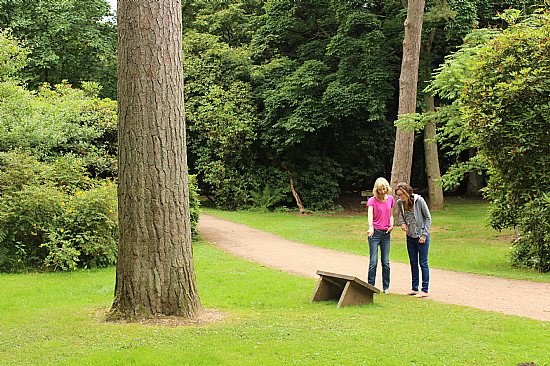
This lecture by Professor T C Smout is seen as a prestigious event to mark the naming of Scotland’s national tree, which is expected to be Scots pine. Professor Smout is acknowledged as the leading history authority on people and forestry in Scotland so the lecture should be entertaining and educational.
The lecture was held in the Budungo Lecture theatre, Edinburgh Zoo on Wednesday 19th March 2014
Continuous Cover Forestry: Delivering Sustainable and Resilient Woodlands in Britain. - National Conference 2014
Forestry is undergoing a period of profound change and reassessment. At the forefront of our thinking is recognition that the global climate is changing and that many current practices need to be adapted to make our woodlands more resilient and robust into the future. We need new strategies for adding value and new market-led solutions for delivery of ecosystem services, while also diversifying the species and structure of our productive forest estate.
Continuous Cover Forestry (CCF) is now recognised as an important approach that has the potential to create diverse, resilient and robust forest systems. However, the transformation from largely even-aged stands in Britain to more complex and irregular structures remains a challenging area of professional practice. There is continuing demand for a stronger evidence-base and practical demonstration of CCF systems.

Building capacity to restore Scotland's natural heritage
Delivered within two priority regions in Scotland, Building capacity to restore Scotland’s natural heritage aims to deliver a unique programme of training and development for volunteers in ancient woodland restoration assessment. Currently, there is virtually no ancient woodland restoration learning and training provision for non-specialist audiences available in the UK. Through the project, volunteers will gain experience as part of a leading restoration project; engage over 1,400 people in ancient woodland restoration; and support the restoration of at least 3,200 hectares of priority Planted Ancient Woodland Sites (PAWS) in Scotland. The volunteer programme will encourage a greater understanding of the significance of ancient woodland sites; develop specialist knowledge and skills required to evaluate ancient woodland; stimulate knowledge-sharing between organisations, landowners and industry specialists; and contribute to ancient woodland restoration at two priority sites in Scotland: the Cairngorms and Hinterland and Great Glen and Three Firths.
Regeneration & growth models for MOSES-GB
MOSES-GB is a distance-independent individual tree growth model based on the MOSES (MOdelling Stand rESponses) concept that was originally developed in the University of Natural Resources and Life Sciences (BOKU), Vienna, Austria. This 3-year PhD project augments the development of MOSES-GB continuing within the Forestry Commission’s Forest Research Agency. The models produced during this PhD project will simulate the patterns of regeneration and early growth of tree species likely to be managed under low impact silvicultural systems (LISS) in Britain.
This work will add the following crucially important functionality to MOSES-GB:
• the simulation of realistic, species-specific, patterns of seedlings on bare ground – whether occurring as natural regeneration or planted
• a mechanism for incorporating details of existing seedlings or transplants through the development of an easily-applied field survey protocol
• accurate modelling of the early growth of key tree species.
Further information about the MOSES-GB mixed-age and mixed species stands modelling project can be found on the Forest Research website.
The impact of commercial woodland management on temperate insectivorous bats
Renewable energy legislation and increasing fuel prices are stimulating use of alternative energy sources. Woodfuel production is gaining momentum. A Forestry Commission initiative aims to encourage and facilitate woodfuel management, support rural woodfuel business and remove barriers to production. Wildlife legislation is seen as a barrier to woodfuel production, yet suffers from a deficiency in empirical evidence.
Bats account for a third of UK mammal species. All species have seen a marked declined over the last century and are afforded full protection under European and domestic legislation. A change in woodland management has shown to impact on woodland foraging bat species and their prey. This PhD project will investigate bat and prey communities in broadleaved woodlands.
It is hypothesised that managing for woodfuel production will be beneficial for invertebrate and bat communities and, as such, this research is expected to provide new evidence that should facilitate greater uptake of commercial woodfuel production in the UK.
Objectives:
1 Quantify bat diversity and abundance under different woodland management regimes
2 Determine whether management for woodfuel is beneficial or detrimental to each individual bat species recorded
3 Investigate species presence and abundance indicators 4 Provide guidelines for future woodfuel management that optimise woodfuel production while conserving and enhancing bat diversity and abundance.
Biodiversity training for communities
CSFT’s Biodiversity Training for Communities project aims to increase the skills and confidence of community groups involved in managing or running a biodiversity or nature conservation site. It will deliver 15 free training events a year between 2012 and 2014 to community woodland groups, biodiversity interest groups and, where appropriate, be open to the general public aiming to increase involvement in these groups, and also national and local citizen science projects.

The events will cover a range of biodiversity focussed topics, including species and habitat surveying, habitat assessments, management plan production and implementation. They will feature both theory and practical sessions to allow participants to learn about the topics whilst also gaining practical experience. All course resources will be available for participants to take away and use on their own site or area, and it is anticipated that the sessions will evolve over time as participants become more experienced.
Further information on the courses can be found here.
Can ecological restoration help build sustainable communities?
The PhD will study the implementation of integrated socio-ecological restoration initiatives at community level to deepen understanding of how ecosystem-human relations can contribute to community engagement processes and the building of sustainable communities. It will focus on a particular type of ecological initiative - ecological restoration (ER) - to study the ways in which ER projects have been implemented at community level in Britain. Although playing an increasingly important role in public policy responses to environmental change (including maintenance of ecosystem services and promotion of ecological resilience), ER has not been subject to in-depth social science analysis.
Specific Research Objectives include:
• Create a better understanding of the role and function of ER as a tool for promoting community engagement and sustainability, and gain insight into the social acceptability of ER.
• Understand the conditions for achieving successful community participation in ER, looking in particular at how they involve place specific issues and attachment processes.
• Develop a critical awareness of the governance conditions surrounding ER (such as participation and regulation) for building community adaptation to environmental change and community resilience.
• Demonstrate the value of multi-method research involving in depth qualitative longitudinal case studies for studying dynamic participatory processes and social surveys for measuring the effectiveness of ER interventions.
How environment and gene flow shape adaptation in Scots pine
Recent trials at CEH show local adaptation in bud burst and cold tolerance in native Scots pine populations along an environmental gradient from East to West Scotland. However the vast majority of observed variation lies within populations. This project aims to determine how large- and fine-scale forces interact to maintain high-within population diversity and what the implications of geneflow from plantations are for native pinewoods. The project will use existing data and simulations to assess historical migration scenarios and the development of patterns of neutral and adaptive genetic structure. These data will be complemented by fine-scale analysis of genetic structure in selected native pinewoods.
Research for Preparation of Book: Sitka spruce, an environmental history
Ruth is preparing and writing a book about a tree species which is an important contributor to UK industry and upland landscapes. Sitka spruce has a fascinating ecological and cultural history in North America and Europe (particularly Britain and Ireland) yet is still misunderstood and viewed with disquiet by the public which uses its products and forests on this side of the Atlantic Ocean.
The book, intended for a wide audience, will describe and explain how this rare conifer species of North American rainforest came to be chosen and used for planting in its hundreds of millions in Irish and British landscapes. Its cultural associations and contributions to First Nations’ and European society past and present will be discussed, as well as its role in native and plantation ecosystems on both sides of the Atlantic. Ruth intends to demonstrate the beauty of Sitka spruce and its benefits to society and the landscape.
The project will involve library research; discussions with ‘experts’ and ‘users’; visits to forests containing Sitka spruce in Britain, Ireland and North America; collating oral history contributions; obtaining and taking photographs; writing and graphics.

OneOak Tree Exhibition - Royal Botanic Gardens Edinburgh
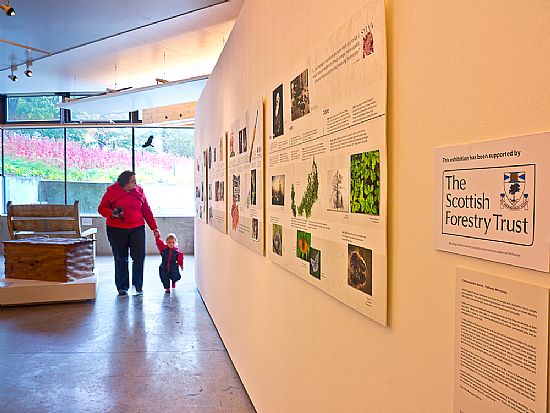
The concept of OneOak project has been to use the full story on a single tree as the foundation to an educational initiative promoting forestry (woodland management) and wood use to the public. The project concludes in 2012.
A typical British oak was donated by Blenheim Palace in late 2009, and since then has been followed closely by 250 Oxfordshire children, and by the wider public through events, exhibitions, a dedicated website and social media. The ordinary tree has become one of the most studied trees in Britain, thanks to support from Forest Research and other scientists (e.g. 3D laser scan, tree weight, carbon content). It has also featured in many stunning works of art, music and film.
The OneOak tree was felled in January 2010, and it has been used to make dozens of items from firewood, charcoal and woodchip, to braces in a timber-framed house and even sawdust used in smoking salmon by legendary chef Raymond Blanc. In the first half of 2012 some of Britain’s best furniture makers, joiners and other craftspeople used the kilned wood to make numerous other items.
A large number of events and activities, together with the website (www.OneOak.info) have been successful in telling the stories in the project. The project concludes in 2012 with a series of major exhibitions at which all the pieces from the project will be increasingly brought together under one roof. The final and major exhibition was hosted by Royal Botanic Garden Edinburgh from October to December 2012.
IUFRO Conference 2012 - Managing forest for ecosystem services: can spruce forests show the way?
This meeting enabled researchers, practitioners and policymakers to present and discuss findings on how best to translate the concepts promulgated by the Millennium Ecosystem Assessment (MEA) and successor documents into strategic, tactical and operational management regimes that will help adapt forests to meet changes in climate and in societal demands.
Advanced Assessment of Minor G.B. Conifer species
The aim of this project is twofold. Firstly to provide a preview of how noble fir (Abies procera), western hemlock (Tsuga heterophylla), Norway spruce (Picea abies) and western red cedar (Thuja plicata) perform in Great Britain in terms of harvested crop quality for solid wood applications. Little is known of the timber properties of these domestically grown resources, but the probable increase in planting, due to concerns over pathogenic risks to our main timber commercial species warrants this investigation. Secondly, the aim is to develop methods of measuring tree architecture using state of the art terrestrial laser scanning technology and to develop improved acoustic assessment for determining wood stiffness in standing trees; methods that would be of benefit to the forest sector.

Alternative Silvicultural Systems - study of adoption and development of case-studies
This project recorded and evaluated applications of alternative silvicultural systems to clear-cutting (ATC) by British forest managers. Recent years have seen increasing adoption of ATC across many ownerships, with multiple objectives. No comprehensive register of examples has been produced since the 1990’s. Project work will centre on desk-review with extensive correspondence enquiries of woodland owners and managers, supported by existing field records / photographs held by the researcher. Additional field visits will be conducted to supplement these. Central project outputs will be a technical report on key issues and an up-to-date locational database of British woodlands where ATC are being adopted, with selected field examples developed into illustrated case-study reports to encourage future ATC information exchange/ site networking. There will be evaluation of methods for quantitative monitoring of silvicultural transformation. Results will be reported in the forestry press and at seminars. Outputs should inform wider adoption of alternative silviculture.
Improving the production of local origin Aspen in Scotland
Most nursery production of Scottish Aspen relies on vegetative propagation using roots collected in the wild. However this method is very labour-intensive, and productivity varies greatly between clones. This is generally thought to be determined genetically, but there is evidence that environmental factors may also play a role. In particular, it has been noted that root suckers may be much more prolific where the ground has been disturbed, such as in areas trampled by cattle. This effect may be caused by exposure of roots to higher light levels, to higher temperatures or to physical trauma, or a combination of these. It is proposed to experimentally manipulate the roots' in situ environment, and to assess the impact of this ‘conditioning’ on subsequent sucker production in the nursery.
If root conditioning is shown to significantly increase sucker production, this finding will have an important practical application. It will make vegetative propagation more cost-effective. It will be particularly useful for otherwise low-yielding clones, and thereby make it easier to include a more diverse mix of clones in planting schemes, in accordance with best practice, and as required by the FRM regulations.
Soil Carbon, Farm Woodlands, and the Woodland Carbon Code
Much afforestation in recent years has taken place on agricultural land. Whilst ostensibly this is good news for climate change mitigation, the carbon balance of these new woodlands is poorly understood. Of particular importance is the need to understand how carbon stocks below ground have been affected by afforestation.
The aim of this project is to investigate the effect of tree planting on farmland on the quantity, depth and type of below ground carbon. This will be assessed through excavation of root systems and sampling of soil carbon stocks and ‘fractionation’ to determine likely residence times for carbon in the soil. The implications for the ‘Woodland Carbon Code’ will be investigated following a life cycle analysis methodology.
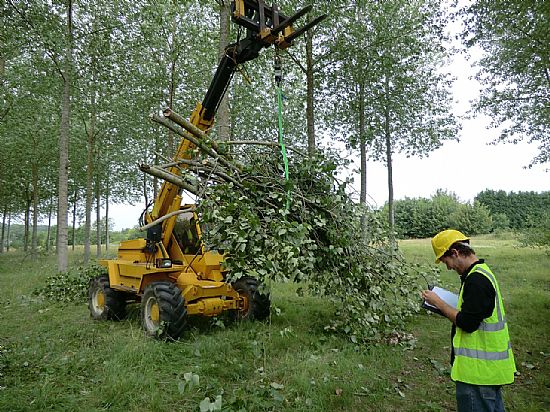
Using a loader to weigh branches from a felled hybrid poplar for quantifying carbon content. Silsoe silvoarable agroforestry trial (June 2011) - Matthew Upson.
A palaeoecological investigation of Tilia cordata in Skelghyll and Common Woods Cumbria
This project investigated the history of two different woodlands near Windermere: Skelghyll and Common woods. The project used palaeoecological analysis to determine the ecological history of the woodland at the local, or stand, scale via the analysis of pollen from peat deposits in small hollows under the woodland canopy. The results questioned the longevity and presence of small-leaved lime (Tilia cordata) in each of the woodlands in order to answer questions raised by the National Trust on the provenance of this species in the woodland. This information will contribute to future woodland management and may establish the woodlands as ancient and therefore of importance.
Susceptibility of Scots and Lodgepole pine provenances to Red Band Needle Blight caused by Dothistroma septosporum
This project began on 1st October 2011, when the student Stuart Fraser (BSc Sheffield; MSc Imperial) took up the position at the University of Aberdeen in collaboration with Forest Research. It is the first Trust supported project to receive support from The Scottish Forestry Trust-Forestry Commission Joint Bursary Award Scheme, and also received funding from Forest Enterprise Scotland and the Forestry Commission.
The study has 2 objectives
Objective 1. To determine the relative susceptibility of different host species to Dothistroma septosporum, (the causal agent of red band needle blight in Britain), with particular reference to different provenances of Scots and lodgepole pine.
Objective 2. To compare host resistance mechanisms between provenances and between species in response to inoculation with Dothistroma septosporum.
Growth and survival of provenances of snow gums (Eucalyptus pauciflora) and other hardy eucalypts
This project explored the performance of species and provenances of particularly hardy Eucalyptus in two of four trials established in 1985. The origins selected in the trials were based on performance of trials established in 1981 and which were subjected to a particularly severe winter in 1981/82. A trial in the series at Chiddingfold near Forest Research’s Alice Holt research station was assessed in 2009. The project involved examining growth and survival of a trial at Torridge and one at Thetford of snow gums and other more hardy origins.
Approaches to the retention of timber potential when restoring or enhancing PAWS sites
Twenty-seven case-studies highlighted approaches including reduction of coniferous canopy density by regeneration thinning, respacing of natural hardwood/ mixed regeneration, enrichment planting, and tending of young hardwoods (brashing, pruning, thinning). Retained timber potential can be found on all ownership classes. Many successful examples involved “traditional estate” forestry and “continuous-cover” forestry techniques with regular monitoring and interventions. Improved woodfuel prices support earlier respacing/ thinning of hardwoods. Financial considerations, stand instability/ windthrow hazard and perceived biodiversity/ conservation constraints impede retention of timber potential on PAWS restoration/ enhancement sites in some cases, favouring clearfell/ restock working. However the predominant limiting factor is the shortage (and perceived decline) of the practical forestry skills and experience that are necessary to optimise timber potential. Effective enabling actions are likely to include simplification/ relaxation of PAWS restoration prescriptions, under-pinning of the forestry training infrastructure and encouragement of technical information exchange. The insights reported will inform the latter angle.
The Social History of Forestry
This project aims to research through personal interviews and ultimately produce a book describing the contribution that forestry has made to the social fabric and economy of Scotland. Looking back to the early 1900's, the work will include interviews with a number of surviving individuals who either worked in “the forestry” or had an influence in its policy development including the added value processing sector.
Further assistance of £1,000 was provided in 2016 to enable full colour illustrations for the book now called "Voices of the Forest".
Documentary - Finding David Douglas
The Trust made a contribution towards the costs of researching and filming an educational documentary programme on the life and work of David Douglas, botanist and explorer who travelled extensively to bring back new plant species to Scotland, including the Douglas Fir.
Continuous Cover Forestry at Glentress
The Glentress Trial Area is one of the longest running Continuous Cover Forestry (CCF) trials in the world. It was established in 1952 by Professor Mark Anderson, who was then the head of the forestry department at the University of Edinburgh. He managed to persuade the Forestry Commission of the value of long term trial areas and was given 117 ha of Glentress forest. The overall aim of the Trial Area was to transform from even-aged stands to an irregular structure using a group selection system over a 60 year transformation period. The transformation involved felling two hectares, made up of multiple group selections between 0.1 and 0.2 ha in size in any one year. Therefore over a 60 year period, the entire Trial Area would have been felled and the groups would be at varying stages of development.
The PhD project aimed to assess forest structure in the Trial Area which was last updated in 1990. The project utilized simple models (the reverse-J distribution and the Equilibrium Growing Stock (EGS)), seedling physiology and a hybrid gap model in an effort to gain a better understanding of the effects of management on stand structure.
Sitka Spruce Segregation and Cutting
This project had four key aims and objectives:
1. Investigate the potential causes of error when using acoustic instruments to measure stiffness of standing trees and logs, examining effects such season, dominance class and silviculture.
2. Compare the accuracy of standing tree instruments to predict log velocity with other indicators such as live crown ratio and slenderness.
3. Simulate a standing tree acoustic measurement, examine the wave propagation behaviour and compare results with fundamental theories presented in the wood science literature and qualitatively examine the possible interaction with variation in density of the outer part of a tree.
4. Determine if alternative cutting patterns based on log acoustics could be a viable way of maintaining the viability of sawmilling in the face of declining timber quality.
Bechstein's Bat Survey
The project is the first time that this most elusive bat has been the subject of a concerted effort to establish baseline distribution data across the entire species range in England and Wales. The aim of the project was to produce a more accurate distribution map and gather information to inform future conservation policy and woodland management.
The Bechstein's bat is one of the rarest of our mammals and a UK Biodiversity Action Plan priority species. Until now it has been difficult to detect as it rarely leaves the canopy of its favoured broadleaf woodland habitat.
Leading UK bat researchers developed and tested a ground-breaking technique to relay ultrasonic social calls to locate these very secretive bats. Their survey techniques have been adopted as the basis for the National Bechstein's Bat Survey across southern England and Wales. The project relied on the involvement of experienced, specially trained volunteers recruited through the local bat group network and the support of landowners and woodland managers.
Modelling the effects of forest management on the wood properties and branch characteristics of UK-grown Scots pine
Changes in silvicultural practices in recent decades—wider initial spacings, a preference for artificial regeneration, and an increased use of mechanised thinnings, have led to concerns about the suitability of Scots pine timber for use in structural applications due to potentially poorer stem form, a greater proportion of juvenile wood and larger, more numerous knots.
As part of the research presented in the paper, novel predictive equations were developed for the key physical, mechanical and branching properties that determine structural timber quality in Scots pine, namely: microfibril angle, wood density, clearwood bending strength and stiffness, and branch number, size, insertion angle and status (alive or dead).
Testing the Adaptive Significance of Seed Zones in Scots Pine
This project, supported by the Trust, used a combination of molecular markers and growth experiments to assess the effectiveness of designated seed zones in Scots pine for the conservation of adaptive variation. The research concluded that there is strong evidence for genetic variation among native Scots pine populations in Scotland in terms of phenology and response to low winter temperature and drought.
Volunteering in Woodlands - Motivations and Barriers
This project focused on practical environmental volunteering to explore what motivates people to become involved in practical volunteering work, what benefits they gain from their involvement and are there any potential barriers to getting or staying involved.
Determining the genetic heritability of wood properties of Sitka spruce critical to timber strength
The aim of the Sitka spruce breeding programme has been to increase productivity whilst improving timber quality for use in the construction industry. While increasing productivity has largely been achieved, higher rates of growth achieved have raised concerns that wood properties associated
with timber strength may be compromised due to a greater proportion of weaker juvenile
wood being present.
This project studied the problem of final timber strength by determining genetic heritabilities and
correlations of certain wood properties of Sitka spruce critical to timber strength within
the outer zone of the juvenile core. The ultimate aim is to determine whether progenies
with both favourable growth rate and timber strength properties can be identified from
within the breeding population.
Adaptation of Ash (Fraxinus excelsior) to Climate Change
The aim of this part-time PhD is to test the adaptability of native ash from a range of UK locations to the predicted climate in 2080.
The specific objectives are to:
- identify provenances of ash that may be closely matched to the future climate and to test them in the current climate through a series of reciprocal transplant experiments
- determine the phenology of ash provenances in relation to their suitability for growing in the predicted climate of 2080
- determine the stratification (cold pretreatment) requirements of the seed of ash provenances
- determine levels and effects of outbreeding depression
Validation of a stem straightness scoring system for Sitka spruce
This project refined and tested a prototype scoring system for the visual assessment of stem straightness in Sitka spruce. The original system comprised a six-point scoring system from 1 (least straight) to 6 (straightest) based on an estimate of straight log lengths in the first 6 m of the stem. A longer log length category and additional score were added to the system to increase relevance to industry practice.